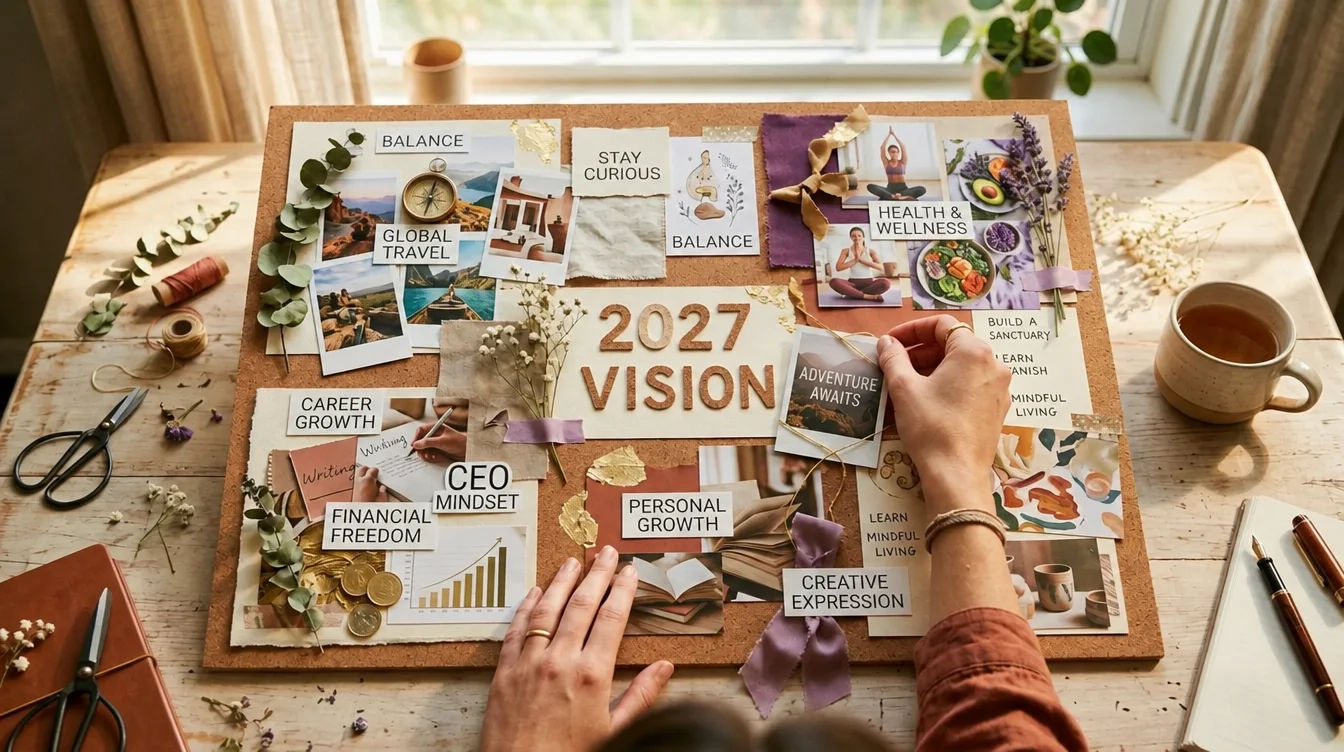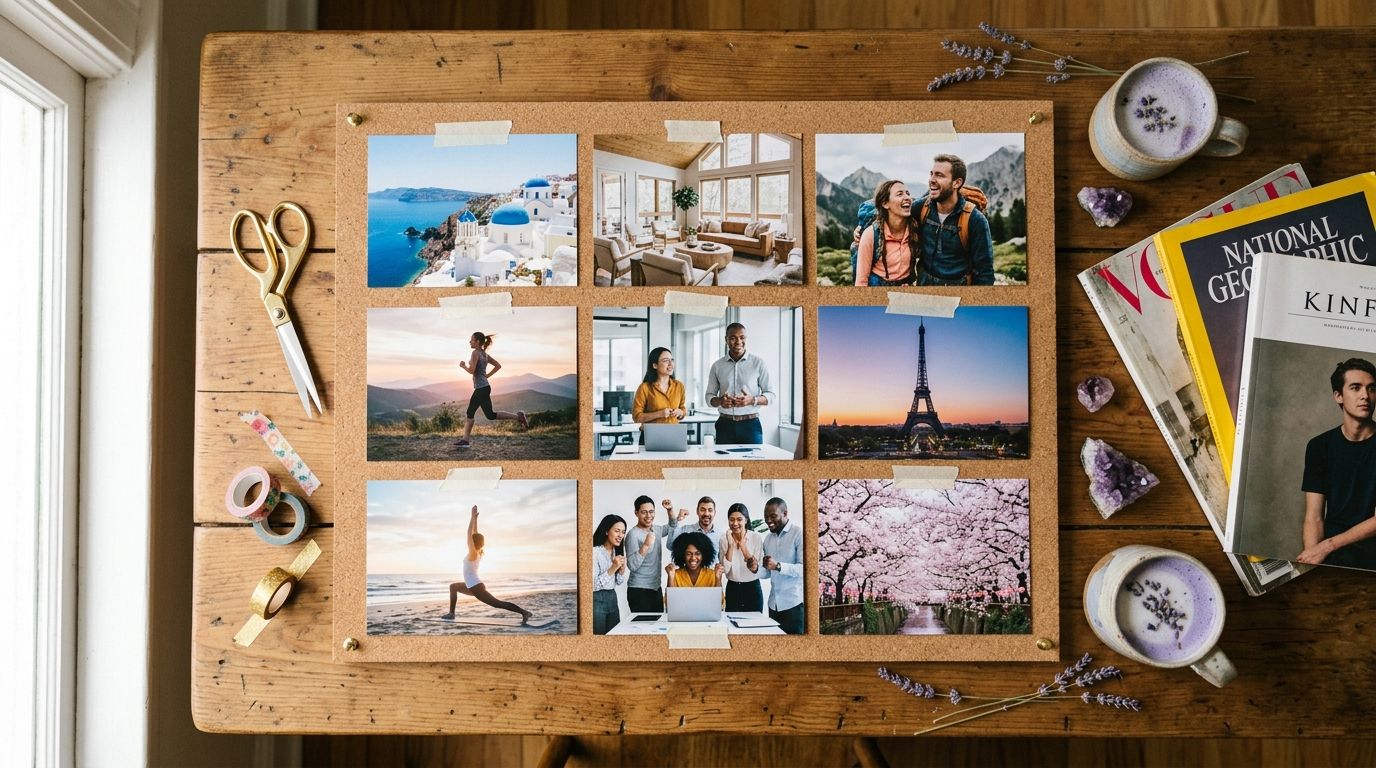

Health Vision Board: 15 Ideas for 2027

A health vision board shows how you want to move, eat, sleep and feel in 2027. Get 15 image ideas, a step-by-step method and a plan for the hard days.

Health Vision Board: 15 Ideas for 2027
In this guide 11 sections
  1. 01What Is a Health Vision Board (and Does It Work)?
  2. 02What Should You Put on a Health Vision Board?
  3. 03How Do You Make a Health Vision Board, Step by Step?
  4. 04What Goes on a Fitness Vision Board?
  5. 05How Do You Make a Vision Board for Weight Loss?
  6. 06What Does a Wellness or Healthy Lifestyle Board Include?
  7. 07How Long Does It Take to Build a Healthy Habit?
  8. 08How Do You Keep a Health Board from Being Just Wishful Thinking?
  9. 09Should You Use a Physical or a Digital Health Board?
  10. 10What About Numerology and Manifesting Your Health in 2027?
  11. 11Sources & Methodology

A health vision board is a set of pictures and words that shows how you want to move, eat, rest and feel in 2027. The strongest ones show you doing small daily things, like walking or cooking, rather than showing a perfect body or a number on a scale.

This is general information, not medical advice. Affirmations and vision boards are a mindset practice, not a substitute for medical, mental-health or financial advice. Check with a doctor or dietitian before you change how you exercise or eat, especially if you have a health condition, an injury, or a history of disordered eating.

Key Takeaways
  • Fill your board with pictures of you doing things (walking, cooking, sleeping well), not with a body or a number
  • Pick two or three health areas, not ten. A small board gets used
  • A board on its own has little evidence behind it. Pair each picture with a small plan
  • Habits take about two months on average to feel automatic, and the range is huge
  • Include rest, sleep and check-ups. Health is more than exercise
  • Start in Q4 2026 with a 90-day trial run so January is not your first attempt

What Is a Health Vision Board (and Does It Work)?

A health vision board is a visual reminder of the way you want to live. It can be a poster, a corkboard or a phone wallpaper. It covers movement, food, sleep, stress and care, and it works only as well as the small steps you attach to it.

Here is the honest part. There is no strong research showing that a vision board alone changes your health. What research does support is the stuff around it: clear goals, planning, and picturing the steps rather than only the result.

One set of experiments is worth knowing about. In four studies, people who were led to daydream in a purely positive way about their future showed lower energy than people who also thought about what stood in the way (Kappes and Oettingen, 2011). Those were general goals, not fitness trials. But the lesson fits: a board full of dreamy outcomes can feel good and then leave you flat.

So build yours differently. Make it a plan you can see, not a fantasy you can admire. If you want the wider picture first, read do vision boards work, or see how a full 2027 vision board comes together across every life area.

What Should You Put on a Health Vision Board?

Put pictures of you doing the habits you want, one word for how you want to feel, and one small first step for each picture. Aim for 8 to 12 images. Choose things you actually enjoy, because you will only keep doing what you like.

Here are 15 ideas. Each one is a scene to look for, plus a caption written as a habit.

  1. A walk you love. A tree-lined street, a beach, a park loop. Caption: "Walking after dinner, three evenings a week."
  2. Your shoes by the door. Ready, laces loose. Caption: "Shoes out the night before."
  3. A strength moment. Lifting a bag of groceries, holding a plank, a resistance band on the floor. Caption: "Strong enough for my day."
  4. A movement you'd do for fun. Dancing, swimming, cycling, a class with a friend. Caption: "Move because it feels good."
  5. A meal you enjoy making. A pot on the stove, a full cutting board. Caption: "Cooking at home four nights a week."
  6. A full glass of water at your desk or bedside. Caption: "Water first thing."
  7. Your bedroom, calm and dark. Clean sheets, phone across the room. Caption: "Lights out by 10:30."
  8. A stretch or yoga corner. A mat on the floor in morning light. Caption: "Ten minutes of stretching."
  9. A quiet outdoor spot. A bench, a lake, a hill. Caption: "Ten minutes outside every day."
  10. Someone you move with. A walking friend, a partner, a class. Caption: "Better together."
  11. A calendar page with an appointment on it. A check-up, a dental visit, a screening your doctor recommends. Caption: "Booked. Done. Off my mind."
  12. A rest picture. A blanket, a book, a nap-worthy couch. Caption: "Rest is part of the plan."
  13. A stress release. A journal, a bath, a slow breath, a favorite song. Caption: "Something small when I'm stretched."
  14. Your future self at the end of a good day. Tired in the good way, smiling. Caption: "I feel like myself."
  15. One feeling word. Steady. Strong. Light. Calm. Pick one, in big letters.

You do not need all fifteen. Two or three areas and a handful of pictures beat a crowded board every time. For more layouts and styles, see vision board ideas. Health tiles also pair well with a money vision board for the gym or check-up budget, a career vision board if work is what drains you, and a travel vision board for the restful trips your body needs.
How Do You Make a Health Vision Board, Step by Step?

Pick two or three areas, choose a feeling word for each, find pictures of you doing the habit, write a one-line plan for each, then hang the board where you'll see it daily. It takes about an hour. The plan lines are the part most people skip.

  1. Pick two or three areas. Movement, sleep, food, stress, medical care, connection. Not all six. Choose the ones where a small change would matter most.
  2. Choose a feeling word for each. "Steady" for sleep. "Strong" for movement. "Nourished" for food. The word is your reason on a hard day.
  3. Find process pictures. Look for scenes of the action, not the outcome. A trail with someone walking it, not a finish-line trophy.
  4. Write a plan line under each picture. Use "If ___, then I will ___." Example: "If it's 7:30 on a weekday, then I put on my shoes and walk for ten minutes."
  5. Add one obstacle line. Example: "When I'm tired after work, I walk for five minutes instead of skipping."
  6. Hang it where you'll see it. A bedroom wall, the fridge, or your phone lock screen.
  7. Put a review in the calendar. Once every three months, ask what worked and change what didn't.

Why process pictures? In a 1999 study, students who pictured the process of studying did better on an exam than students who pictured only a good grade (Pham and Taylor, 1999). It was a study about exams, not health. But the idea carries over: rehearsing the steps helps more than admiring the finish line.

✅Is Your Health Vision Board Ready?
0/9

Pictures

Plans

Care

What Goes on a Fitness Vision Board?

A fitness vision board shows the ways you want to move, what you want your body to be able to do, and the rest that keeps you going. Think "carry the shopping in one trip" or "walk the whole trail", not a number on a scale or a body that belongs to someone else.

The World Health Organization's 2020 guidelines say adults should aim for at least 150 to 300 minutes of moderate activity a week, plus muscle-strengthening on a regular basis. They also say to sit less (WHO fact sheet). Any movement counts, and a beginner can start far below that. Ask your doctor what is right for you, especially with a health condition or after an injury.

Good fitness tiles look like this:

  • Functional goals. Climbing stairs without stopping. Playing on the floor with your kids or grandkids. Getting up from the ground easily.
  • Skills. A first push-up, a new yoga pose, a swim length, a class you have been curious about.
  • Events with a friend. A charity walk, a fun run, a hiking weekend.
  • Recovery. A foam roller, a rest day, a warm-up. Recovery keeps you from getting hurt.

Leave off harsh slogans like "no pain, no gain." Pain is a signal to stop, not a badge. Kind words work better: "Show up," "One more walk," "Steady wins."

How Do You Make a Vision Board for Weight Loss?

Keep it about habits, energy and care, not a number or a "before and after" body. Weight is affected by many things, including health conditions and medication, and a board that focuses on it can quickly turn into shame. Habit pictures give you something you control.

If weight is part of your year, use tiles like these:

  • A grocery basket full of food you like.
  • A weekly cooking session with a friend or a playlist.
  • A regular walk on your calendar.
  • A doctor's appointment, so a professional is on your team.
  • A feeling word: "Nourished" or "Capable."

Skip stranger-body photos, "goal weight" numbers and fast-results promises. If you have ever had an eating disorder, or a board like this brings up guilt or fear, set it aside and talk to a clinician or a support service. The same goes if you are pregnant or postpartum. For a fuller look at the mindset side, read how to manifest weight loss.

What Does a Wellness or Healthy Lifestyle Board Include?

A wellness board widens the frame beyond exercise. It includes sleep, stress, time outdoors, friendships and medical care. Many people find that sleep and stress do more for how they feel than any workout does, so give those areas real space.

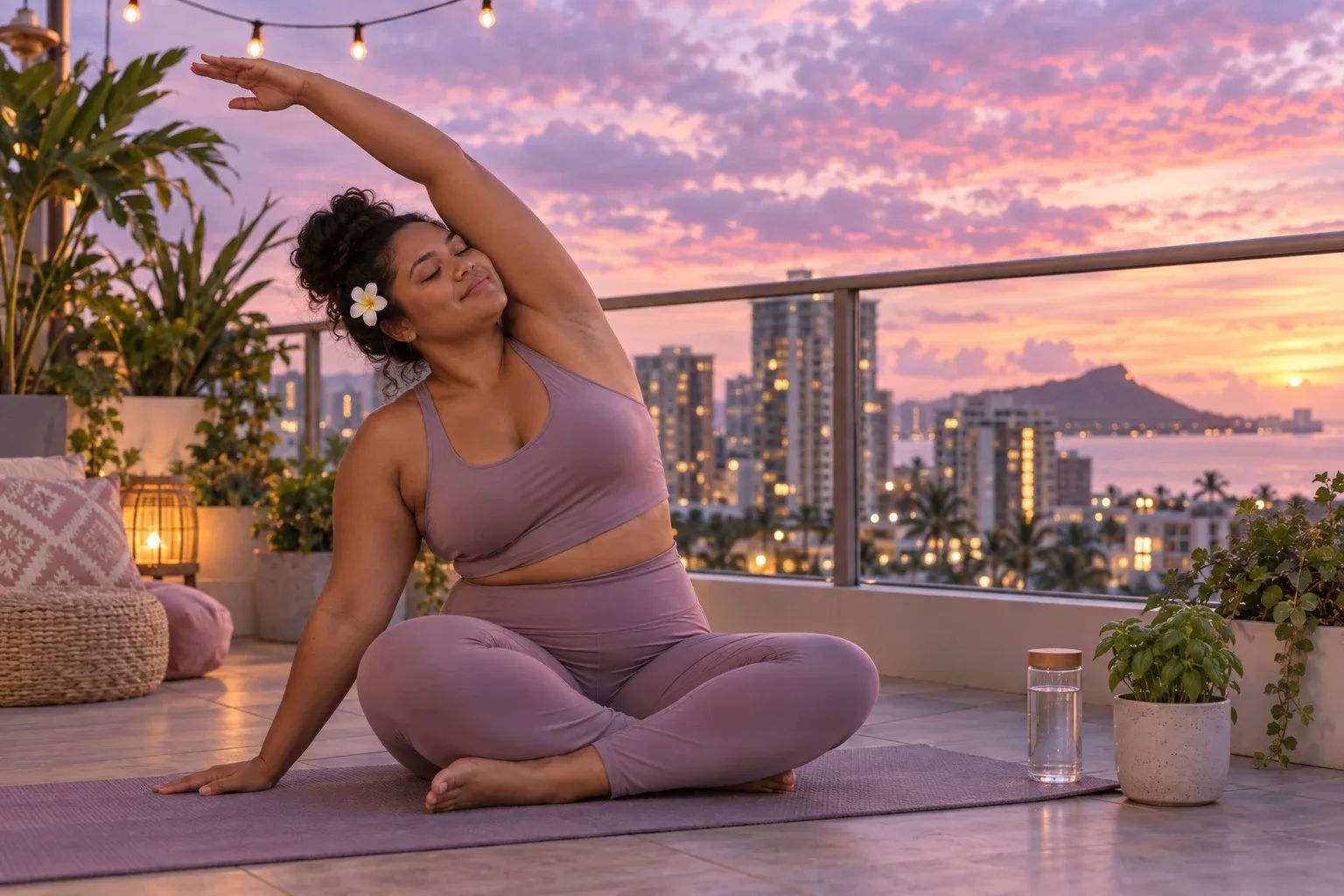
Health vision board idea: a woman stretches on a city balcony mat at dusk beside a glass of water

The CDC lists 7 or more hours of sleep for adults aged 18 to 60, with slightly different ranges for older adults. A bedroom picture with a set bedtime is a strong tile.

Here are four sample boards for different starting points:

Your starting point Core pictures First small step
Just beginning A short walk, water glass, bedroom at night A ten-minute walk after one meal
Busy parent A kitchen table, stretching on the floor, a friend's coffee date Five minutes of movement while the kids play
Returning after illness or injury Rest, a physio or doctor visit, gentle movement Follow your clinician's plan, then add one walk
Over 50 and building strength Grocery bags, stairs, a class with others Two short strength sessions a week, as your doctor allows

Adjust freely. The point is that your board matches your life now, not the life of someone in a magazine.

How Long Does It Take to Build a Healthy Habit?

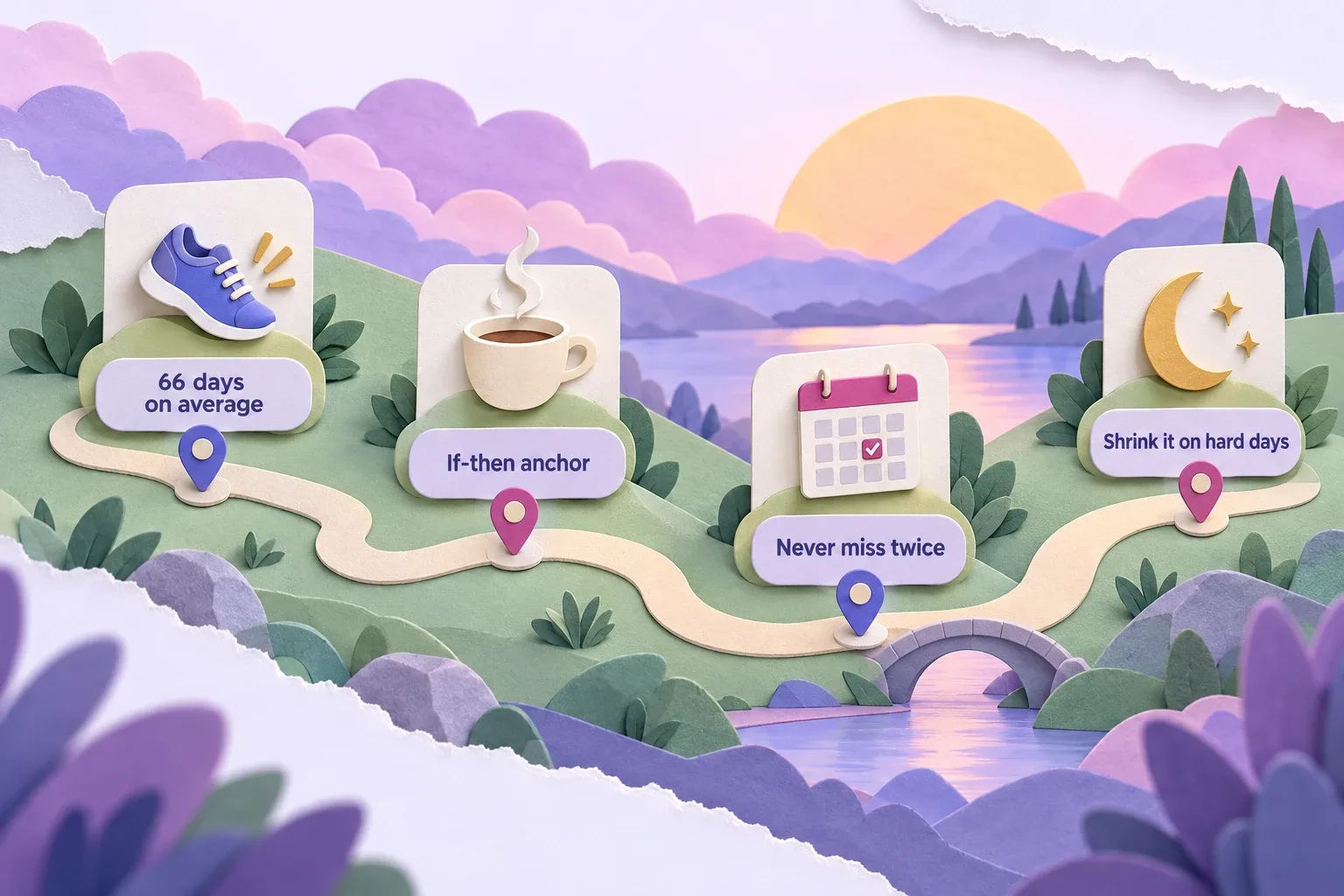
On average about two months, and it varies a lot. In one well-known study of 96 volunteers, the time for a new daily behavior to feel automatic averaged 66 days, with a range from 18 to 254 days (Lally et al., 2010).

Health vision board habit plan: 66-day average, if-then anchor, never miss twice, shrink it on hard days

That means "21 days" is a myth. It also means missing a day is normal. Plan for it:

  • Use an if-then anchor. "After I pour my morning coffee, I do five minutes of stretching." Linking a habit to something you already do helps it stick.
  • Never miss twice. One skipped day is life. Two in a row is the start of a new habit. Get back the next day, even with a tiny version.
  • Shrink it on hard days. A five-minute walk still counts.

A gentle timeline for late 2026: use October to December as a 90-day trial. By January you'll know which pictures fit your life and which were wishful.

How Do You Keep a Health Board from Being Just Wishful Thinking?

Give every picture an obstacle and a plan. That is the whole trick. Ask, "What will get in my way?" and write the answer next to the image, along with what you'll do when it happens.

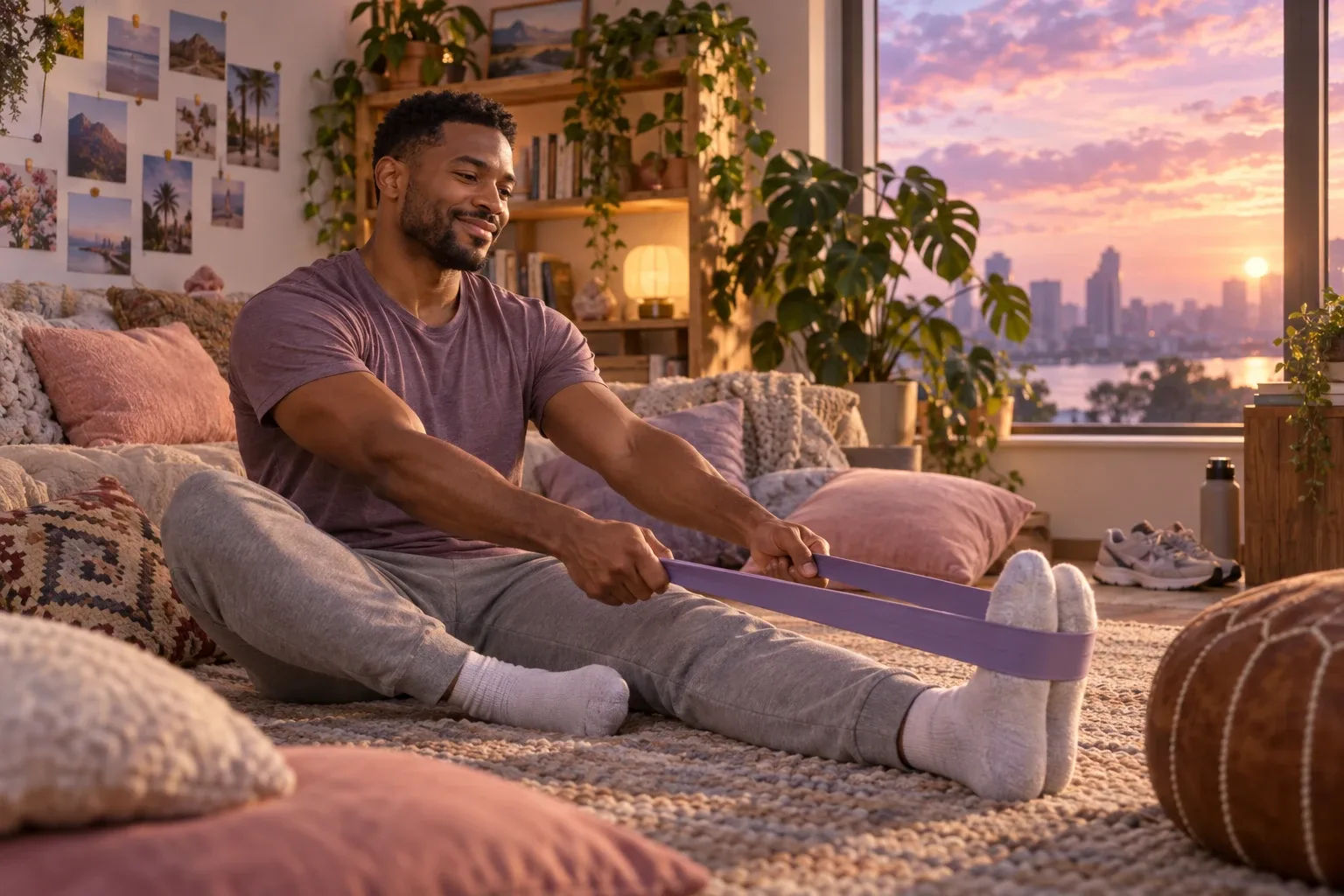
Health vision board idea: a man stretches with a band in a cushion-filled living room by a photo board

Here is a worked example for one tile:

  • Picture: You walking a tree-lined street.
  • Feeling word: Steady.
  • Obstacle: "By 6pm I'm worn out and just want the couch."
  • Plan: "If I feel wiped at 6pm, then I put on my shoes and walk to the end of the block. If I still feel awful, I turn back."

This borrows from a method psychologist Gabriele Oettingen calls WOOP (Wish, Outcome, Obstacle, Plan), and from research on "implementation intentions," which finds that if-then plans help people follow through (Gollwitzer and Sheeran, 2006).

Then check the board against real life once a week for five minutes. What did you actually do? Adjust the plan, not your self-worth. Pairing the board with writing is powerful too: try goals for 2027 to set the year's direction, and new year's resolutions for 2027 for a realistic way to choose.

Should You Use a Physical or a Digital Health Board?

Either one. Choose the one you'll look at every day. A physical board on the kitchen wall is hard to ignore. A digital board on your phone is with you all day and easy to change. Many people do both.

There is no strong evidence that one format is better. A hybrid is easy: print the board for your bedroom, and save a copy as your lock screen. If you want a digital version, see digital vision board.

You can also turn your wishes into photos of you. Manifest Mosaic lets you write what you want from 2027, add one selfie, and get your first picture free. For a health board that could be you on a morning walk or cooking in your own kitchen, a picture of the doing rather than a body. The full board is $19, paid once, and includes 30 morning letters from your future self, one a day. Those are a natural place to remind yourself of the plan on the days you'd rather skip it. For ideas on what to write to yourself, see letter from your future self and these letter to future self prompts.

What About Numerology and Manifesting Your Health in 2027?

In numerology, 2027 adds up to 2+0+2+7 = 11, a master number, which reduces to 2. Practitioners read this as a year of balance, sensitivity and partnership. It is a tradition and a reflection prompt, not evidence, and it does not cause health.

If you like the symbolism, use it gently. A "2" year might nudge you toward rest, listening to your body and doing things with a friend. That works with everything above. Manifestation and visualization can support motivation, but they do not replace treatment, medication or check-ups. If you want practical methods, try how to manifest in 2027, and to make the picture of you feel real, read how to see your future self.

If you're struggling or thinking about suicide, call or text 988 (US) or contact your local emergency number: 988lifeline.org.

See yourself living it in 2027 — make your first picture free →

Sources & Methodology

WHO, "Physical activity" fact sheet — current adult activity recommendations.

Bull et al. (2020), "World Health Organization 2020 guidelines on physical activity and sedentary behaviour," British Journal of Sports Medicine — the 150 to 300 minute weekly range and the advice to add muscle-strengthening and sit less.

CDC, "About Sleep" — recommended sleep hours for adults by age.

Kappes & Oettingen (2011), "Positive fantasies about idealized futures sap energy," Journal of Experimental Social Psychology — why purely positive daydreaming can lower energy. General goals, not fitness.

Pham & Taylor (1999), "From Thought to Action," Personality and Social Psychology Bulletin — picturing the process helped more than picturing the outcome, in an exam setting.

Lally et al. (2010), "How are habits formed," European Journal of Social Psychology — the 66-day average and 18 to 254 day range for habits to feel automatic.

Methodology: we relied on primary studies and official health guidance, and we describe the limits of each. Several studies here are small or come from non-health settings, so treat them as reasons to plan, not promises.

Questions

Frequently asked questions

Put pictures of you doing the habits you want: a walk, a home-cooked meal, a stretch, an early night, a check-up on the calendar. Add one word for how you want to feel. Choose actions over a body or a number.

A board alone has little direct evidence behind it. What helps is pairing it with a plan: a small habit, a set time and an answer for the day you feel tired. The board reminds you. The plan does the work.

Once a day for about a minute is plenty. Pick one picture, imagine yourself in it, then name one small step for today. Review the whole board once a quarter and change anything that no longer fits.

Most people do better without one. A number can turn into pressure and shame. Pictures of habits, energy and how you want to feel are kinder and easier to act on. Talk to a clinician before setting any weight target.

Start in October or November 2026. That gives you a 90-day trial run before January, so you learn what actually fits your life. If it is already January when you read this, start today. Any month works.

Your first picture is free

See yourself in 2027.

Write what you want from next year, add one selfie, and see a photo of you already living it. Then turn all nine wishes into your board.