 Manifest Mosaic
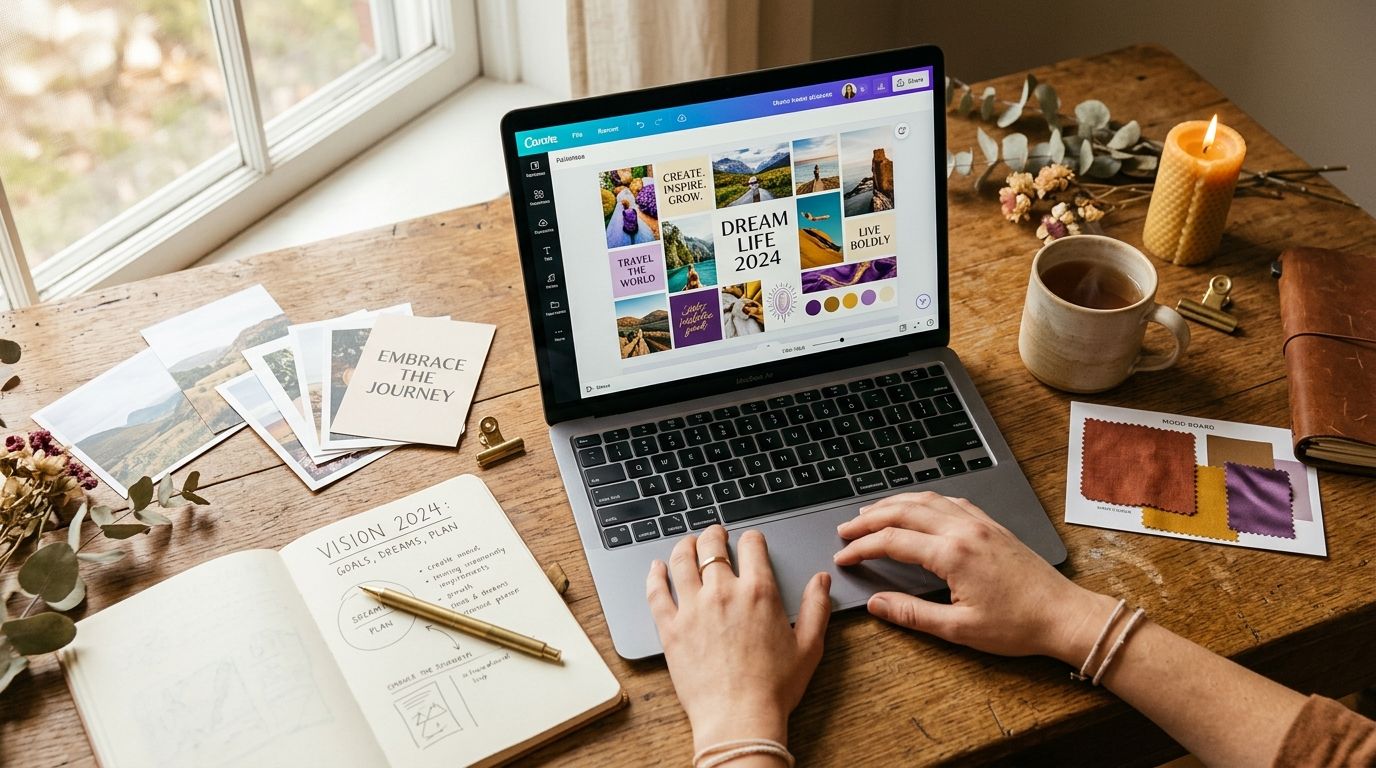
A digital vision board is a collage of pictures, words and goals that lives on a screen instead of a wall. You can build it in Canva, on Pinterest, on your phone, or with photos of yourself, then keep it where you look every day, such as your lock screen.
There are many ways to make one, and the right way depends on how you live. In this guide you will learn five methods, what the research says about vision boards, and one simple design rule that makes any board more useful. If you are planning your 2027, you have time to do this properly.
- A digital vision board is a collage of your goals on a screen you already open every day.
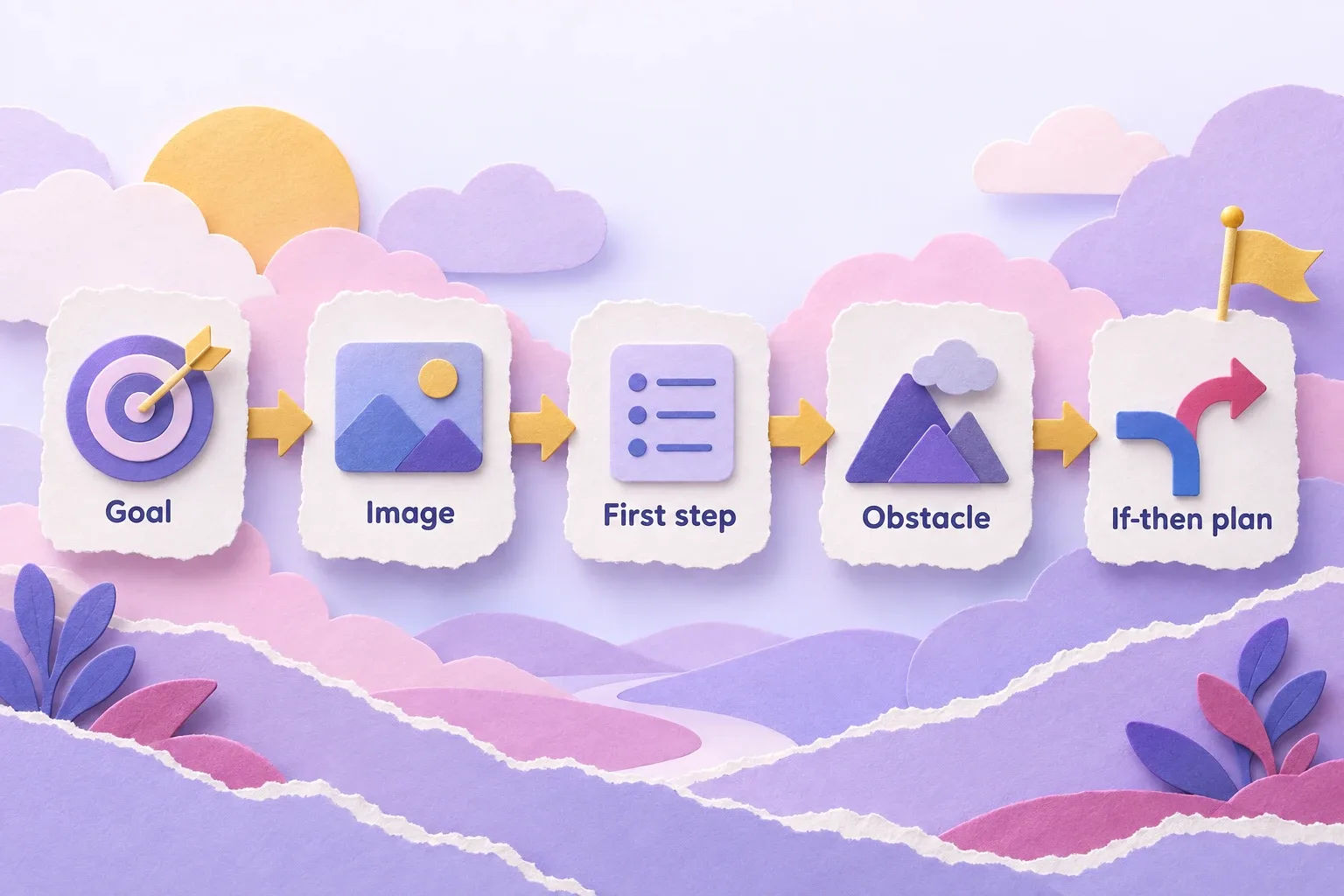
- Research on imagining the future says a board of happy endings is not enough. Add a first step and an obstacle for each goal.
- Canva, Pinterest, your phone, photos of yourself and dedicated apps all work. Pick the one you will actually see daily.
- Build yours between October and December 2026 so you enter January with a plan.
- Keep it to three to six goals. A crowded board is easy to ignore.
What is a digital vision board?
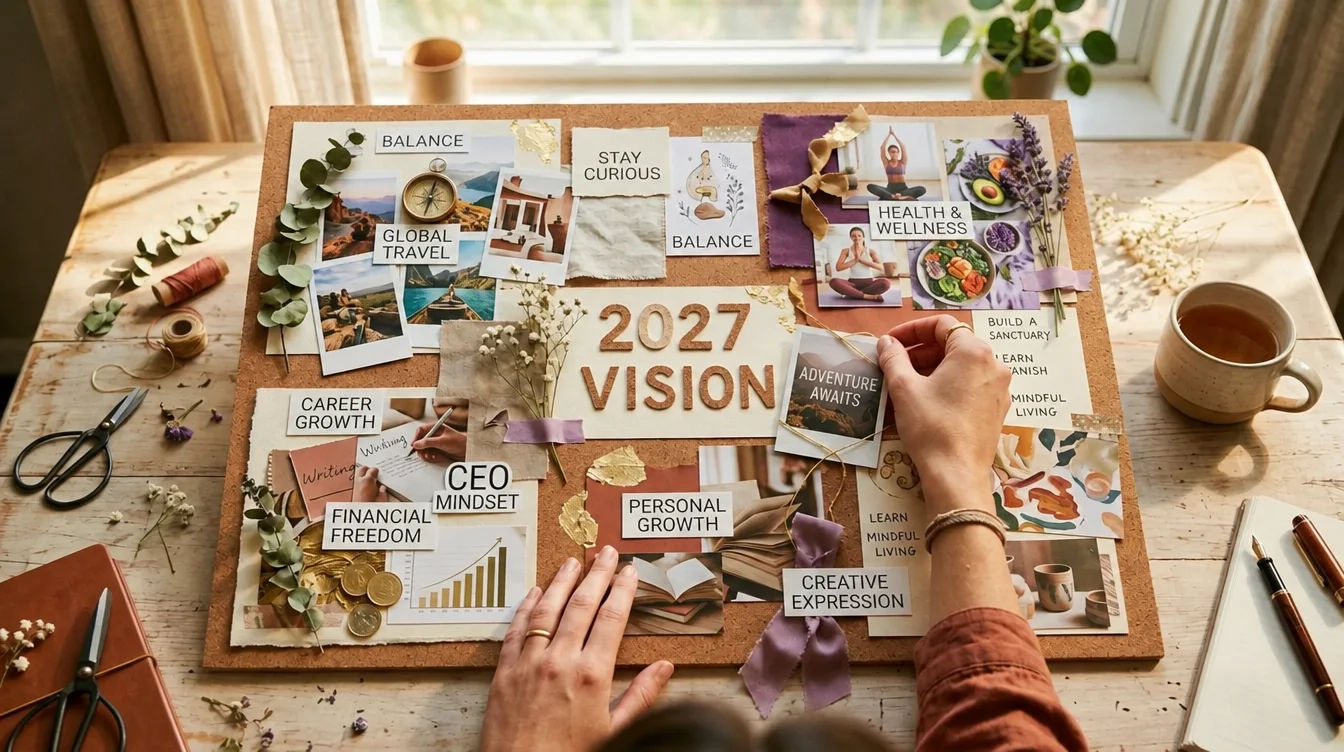
A digital vision board is an online or on-screen version of a vision board: a collage of images, words and affirmations that shows the future you want. Wikipedia describes a dream board or vision board as a collage of pictures and affirmations of one's hopes, meant as a source of inspiration and motivation.
The digital part is the point. A paper board hangs in one room. A digital one can sit on your phone, your laptop and your tablet. You can also change it in a minute when a goal changes.
Two quick clarifications. First, this guide is about personal goals. In business, a "vision board" often means a team's product strategy, which is a different thing. Second, a board is a reminder tool. It does not make things happen by itself. If you want the basics first, read what a vision board is or browse the full 2027 vision board guide. If you would rather compare it with a different approach, see becoming board vs vision board.
Here are the five ways in this article:
- Canva. Best for a polished, designed look.
- Pinterest. Best for collecting ideas fast.
- Your phone. Best for seeing it every day.
- Pictures of yourself. Best for making it personal.
- A vision board app. Best if you want reminders and extras.
Do digital vision boards actually work?
No study has tested digital vision boards directly, so nobody can promise they work. What research does show is that imagining the future helps when you also picture the steps and the obstacles, and that dreaming only about the happy ending can backfire. The way you design the board matters more than the tool.
Here is what the evidence says, in plain terms.
Picturing the process beats picturing the prize. In a 1999 study of college freshmen, students spent five to seven days before a midterm imagining one of four things: the process of studying, the outcome of a good grade, both, or nothing. Imagining the process led to more studying and better grades. It also helped planning and lowered anxiety. It was a small classroom study, so treat it as a useful clue, not a rule.
Pure daydreaming can lower effort. A review by Oettingen and Schwörer (2013) says that fantasizing only about a wished-for future leads to poor problem solving and little change in behavior. The same review reports that in four studies, positive fantasies produced lower energy and effort than other kinds of thinking. Their fix is called mental contrasting (the basis of the WOOP method): picture the future you want, then picture what stands in the way.
Writing goals down helps, especially with a check-in. In a small 2015 study by psychologist Gail Matthews, presented at a conference and not peer-reviewed, people who wrote down their goals achieved more than people who did not. Those who also sent weekly progress updates to a friend did best: 76% reached or got more than halfway to their goals, versus 43% of those who did not write them down.
One myth to skip: the famous claim that "3% of Yale graduates with written goals earned ten times more." Matthews says no such study was ever done. Wikipedia also notes that some see vision boards as counterproductive, because constant fantasizing can lead to less action, and that an "action board" is often suggested as a better companion. For more on this, see do vision boards work?.
The design rule that comes out of all this: every image on your board gets a first step and an obstacle plan. The next section shows how.