What Board Surface Should You Use?
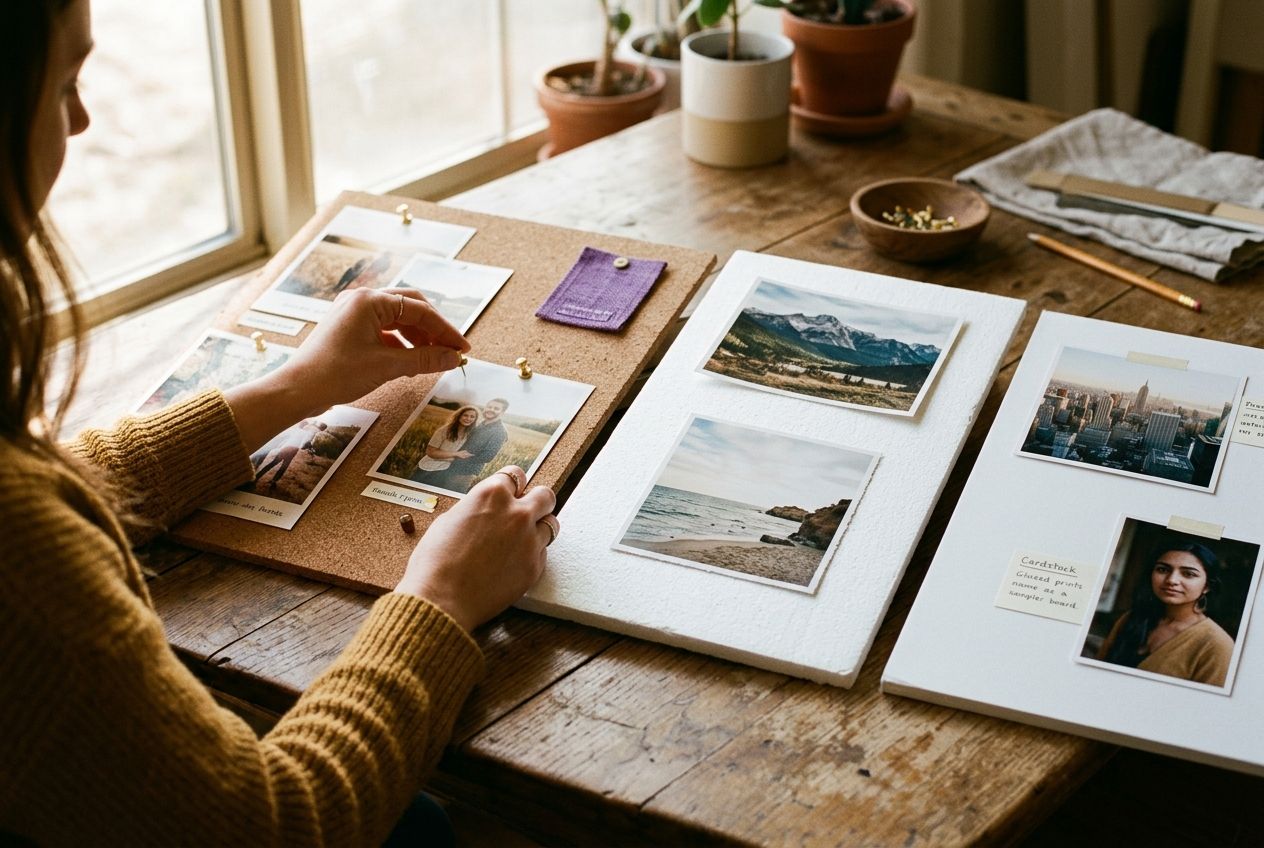
For most people, a 20×30" or 24×36" cork board is the best vision board surface, because push pins let you swap images as your goals change. Foam board suits a one-time glued board, poster board is the cheapest option, and canvas or framed boards look best on display. Pick based on how often you'll update it.
| Surface |
Price |
Pros |
Cons |
Best For |
| Cork board |
$8-20 |
Easy to rearrange, reusable, pins hold well |
Visible cork between images |
People who update monthly |
| Foam board |
$3-8 |
Lightweight, clean white surface, cheap |
Hard to rearrange once glued |
One-time creation |
| Poster board |
$1-3 |
Cheapest, available everywhere |
Flimsy, bends easily, one-use |
Budget boards, kids' boards |
| Canvas board |
$10-25 |
Premium look, durable, hangable |
Expensive, permanent |
Display-quality boards |
| Magnetic board |
$15-30 |
Easy rearranging with magnets |
Heavy, limited sizes |
Frequent updaters |
| Bulletin board (framed) |
$15-35 |
Professional look, wall-ready |
Heavy, limited size options |
Living room/office display |
Our recommendation: Cork board in the 20×30" or 24×36" size. It balances cost ($8-15 at any craft store), reusability (push pins let you swap images monthly), and durability (lasts years). If you want something more polished, a framed cork board from IKEA or Target runs $15-25 and looks professional on a bedroom wall.
✨ Key Insight: The board itself is the least important supply. A $1 poster board with deeply meaningful images will do more for you than a $35 framed canvas with generic magazine cutouts. Invest your time in image selection, not board quality.
What Adhesives Do You Need?
The adhesive you need depends on your board: push pins for cork, a glue stick or double-sided tape for foam and poster board, and magnetic tape for magnetic boards. Washi tape adds decorative borders. Using the wrong one causes images to fall off, stains, or permanent bonding when you wanted flexibility.
- Push pins (for cork board) — Classic brass pins ($3 for 100) or decorative pins ($5-8 for 50). Best option because they allow easy rearranging. Choose flat-head pins so images lay flush.
- Glue stick (for foam board and poster board) — Elmer's or Scotch permanent glue stick ($2-4). Apply evenly to the back of each image. Press firmly and hold for 5 seconds. Once dry, it's permanent.
- Double-sided tape (for any surface) — Scotch removable double-sided tape ($4-6). Good middle ground — holds well but can be removed without damage. Best for foam board.
- Washi tape (decorative borders) — $3-8 per roll in craft stores. Use to create borders between categories or frame individual images. Comes in hundreds of patterns and colors. Also works as a light adhesive.
- Magnetic tape (for magnetic boards) — Self-adhesive magnetic strips ($5-8). Cut to size and stick to the back of each image.
Do NOT use: Liquid glue (wrinkles paper), super glue (permanent and messy), regular tape on the front of images (looks cheap and yellows).
Where Do You Get Images for a Vision Board?
You have five sources for vision board images, and you don't need all of them. Most people use 2-3 sources and collect 20-30 images during a gathering session, then narrow to the 9 most powerful ones for the final board.
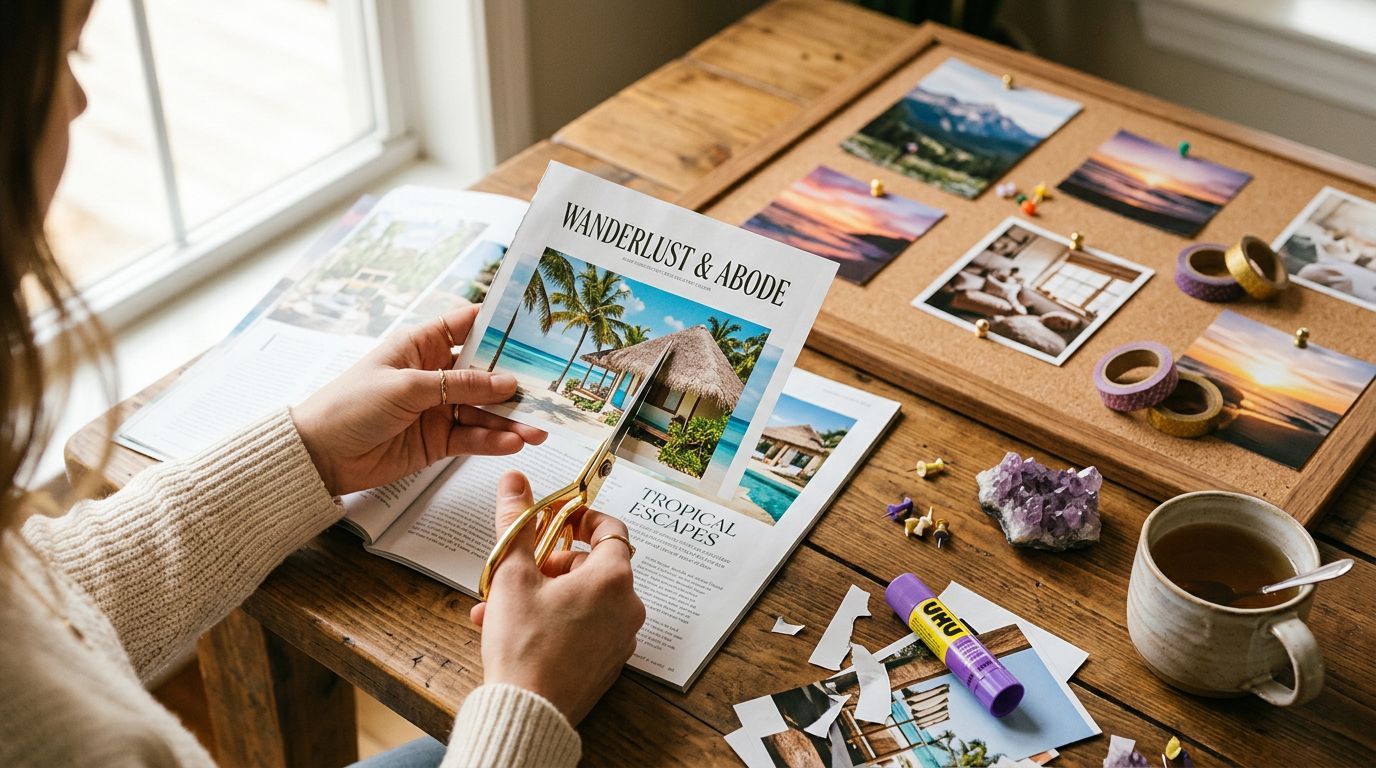
- Magazines — Flip through lifestyle, travel, home, and fashion magazines. Rip out anything that creates an emotional response. Don't overthink during collection — curate later. Good magazines: National Geographic (travel), Architectural Digest (homes), Vogue (aesthetic inspiration), Real Simple (lifestyle). Cost: $5-10 per magazine or free from doctor's office recycling bins.
- Printed photos from the internet — Search Pinterest, Google Images, or Unsplash for specific scenes. "Craftsman house red door Portland" not just "nice house." Print on glossy photo paper at home or at a print shop. Cost: $0.10-0.30 per print at CVS/Walgreens, free at home if you have a color printer.
- Your own photographs — Include real photos from your life that represent the feeling you want more of. A vacation photo where you felt completely free. A photo with your partner from your happiest day. These carry more emotional weight than any stock image.
- Photos of you living it — Manifest Mosaic turns your wishes into photorealistic scenes of you living your dream life — your actual face in a beach house, on stage giving a keynote, or walking through your dream neighborhood. Seeing yourself in the scene makes the goal easier to picture (more on this in how to see your future self), and imagining something engages many of the same brain areas as actually seeing it (Pearson et al., 2015).
- Free printable images — Download curated vision board images organized by category from our vision board pictures collection or printable vision board images.
For guidance on selecting the most emotionally powerful images, see how to make a vision board. A vision board is, as Wikipedia puts it, a collage of images and affirmations, and supplies only matter as much as the goals behind them. Once it is built, how to manifest in 2027 covers what to do with it each day.
What Decorative Supplies Make a Vision Board Better?
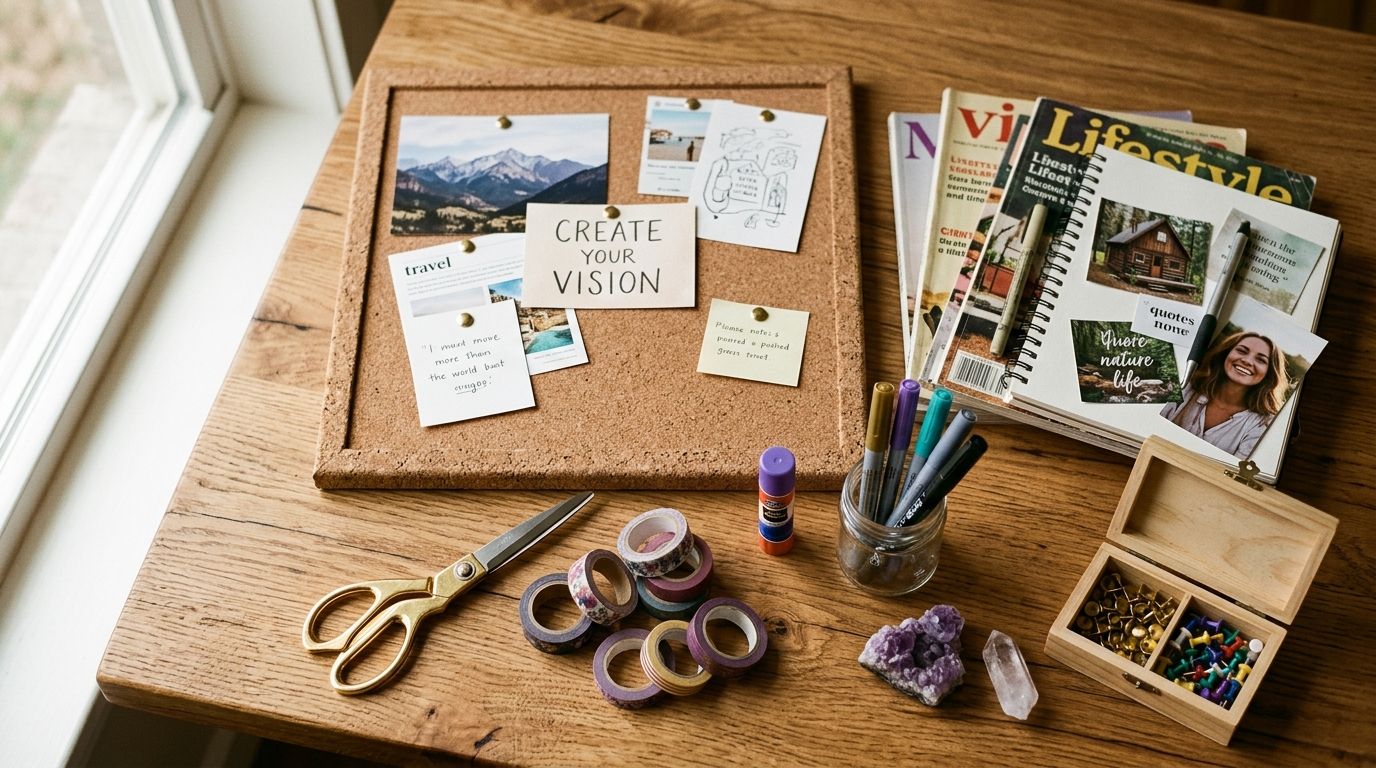
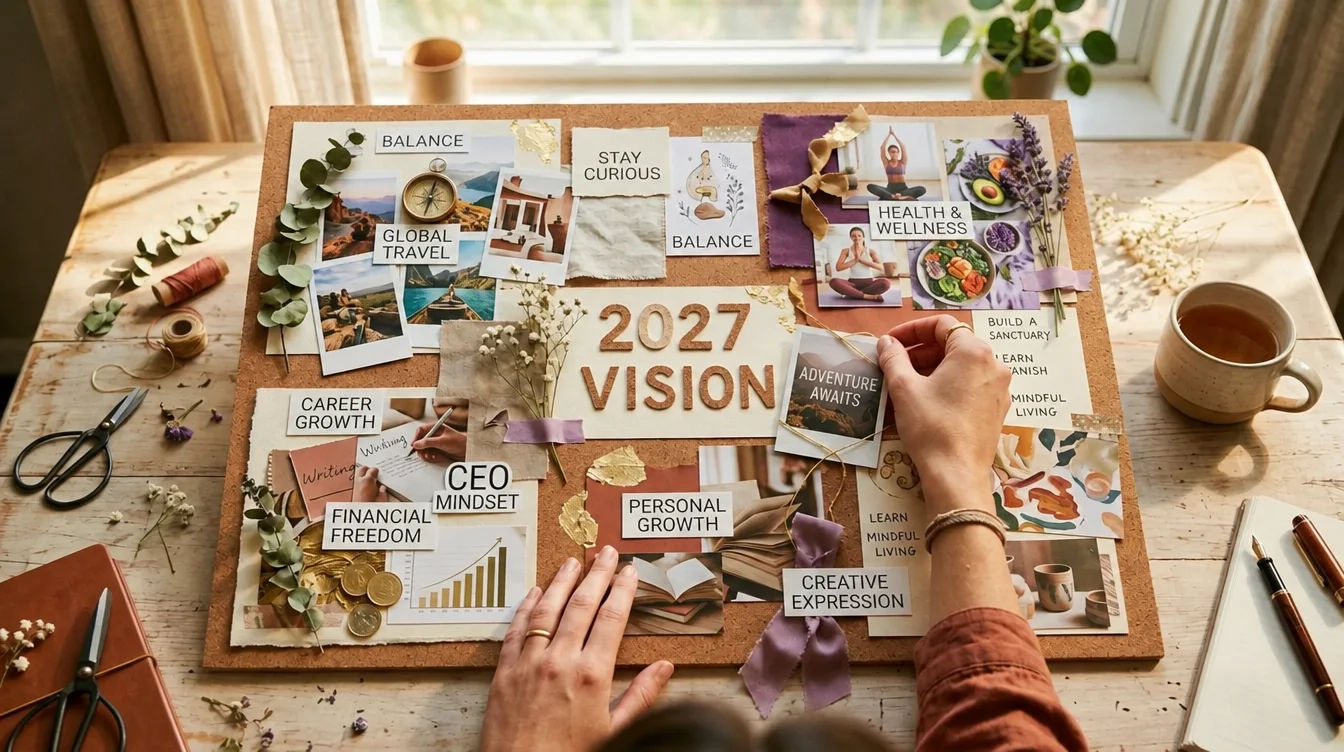
Decorative supplies are optional but they transform a basic vision board into something you enjoy looking at every morning. The aesthetic quality of your board affects how often you engage with it — a board you find beautiful gets more daily viewing time.
- Markers and paint pens — Gold and white paint pens ($5-8 for a set) for handwriting affirmations directly on the board. Metallic Sharpies work well on dark backgrounds. Write power phrases: "I AM ENOUGH," specific numbers like "$150,000," or timeline markers like "By December 2027."
- Stickers and letter stickers — Alphabet stickers ($3-5) for clean, consistent affirmation text. Star and heart stickers for accenting important goals. Available at any craft store.
- Washi tape — Use as decorative borders between life categories, to frame your central image, or to create a color-coded system (purple for spiritual, gold for financial, pink for love).
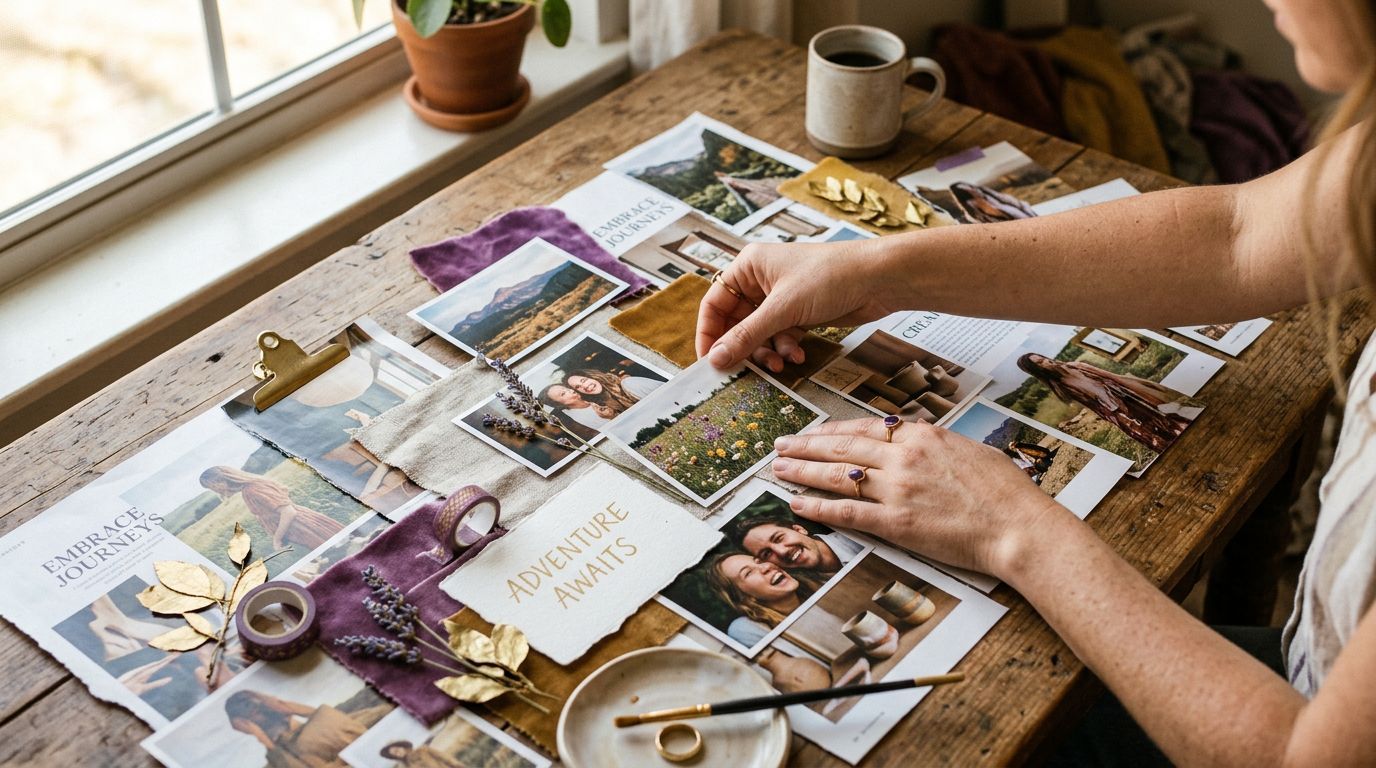
- Dried flowers and herbs — Pressed lavender, rose petals, or eucalyptus leaves add texture and a sensory element. Tuck them under push pins or tape them at board edges. Lavender also adds a calming scent during viewing practice.
- Crystals (small, flat-backed) — Flat-backed amethyst or rose quartz pieces ($3-5 on Amazon) can be attached to boards with strong adhesive. They add a spiritual element that many manifestation practitioners value.
- Ribbon or twine — String across the board horizontally to create hanging zones where images clip with mini clothespins. Creates a charming, artisanal look.
✨ Key Insight: People who make their boards beautiful come back to them more. It's not about Instagram aesthetics — it's about creating something you're genuinely drawn to look at every morning. If gold paint pens and dried lavender make that happen, they're not decorations. They're tools.

 Manifest Mosaic