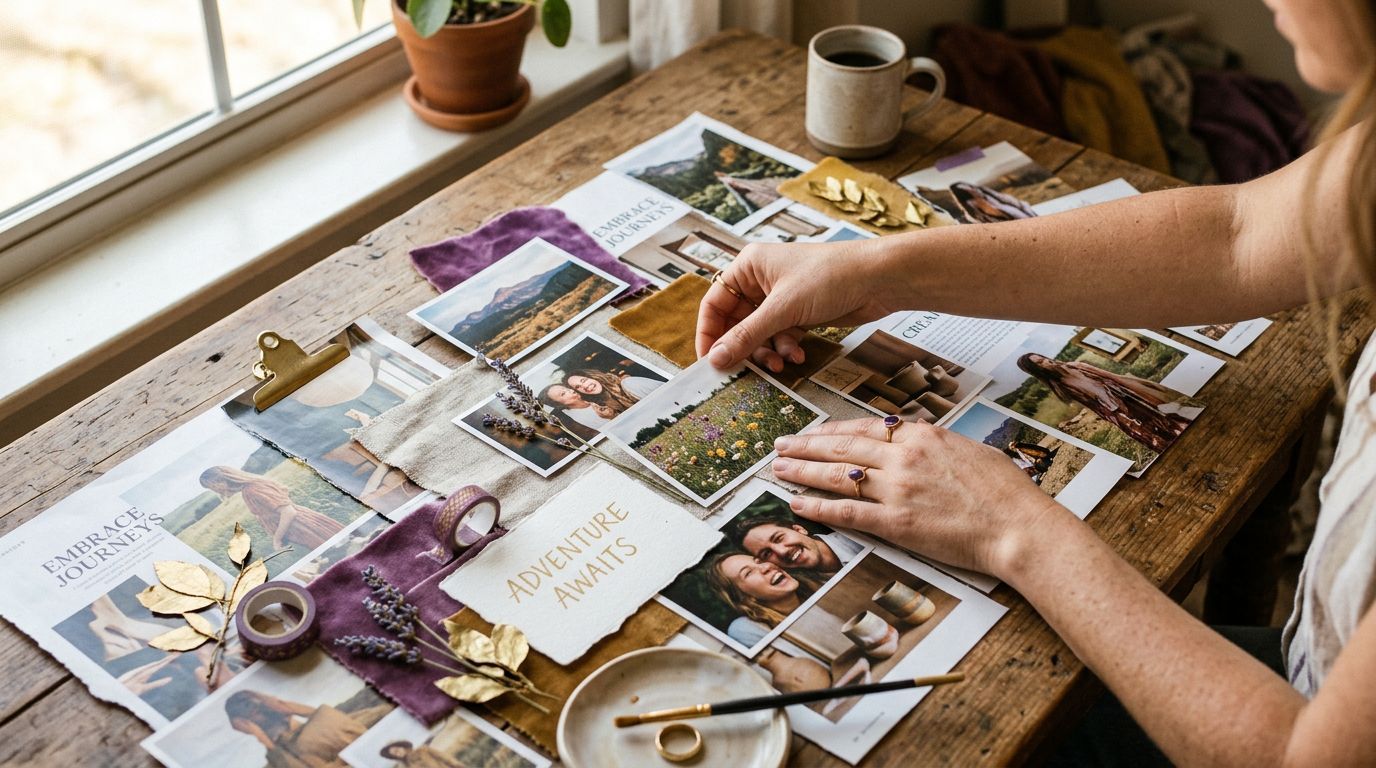
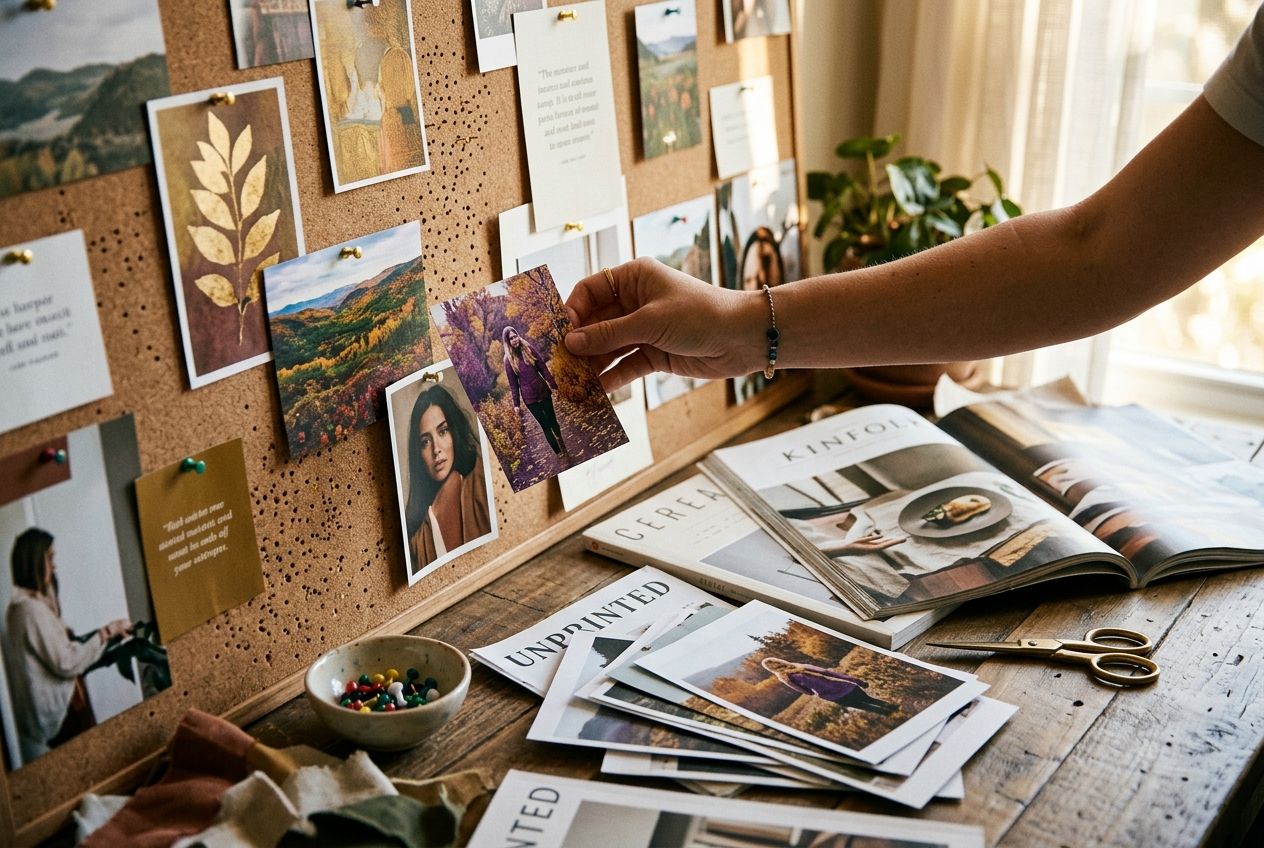
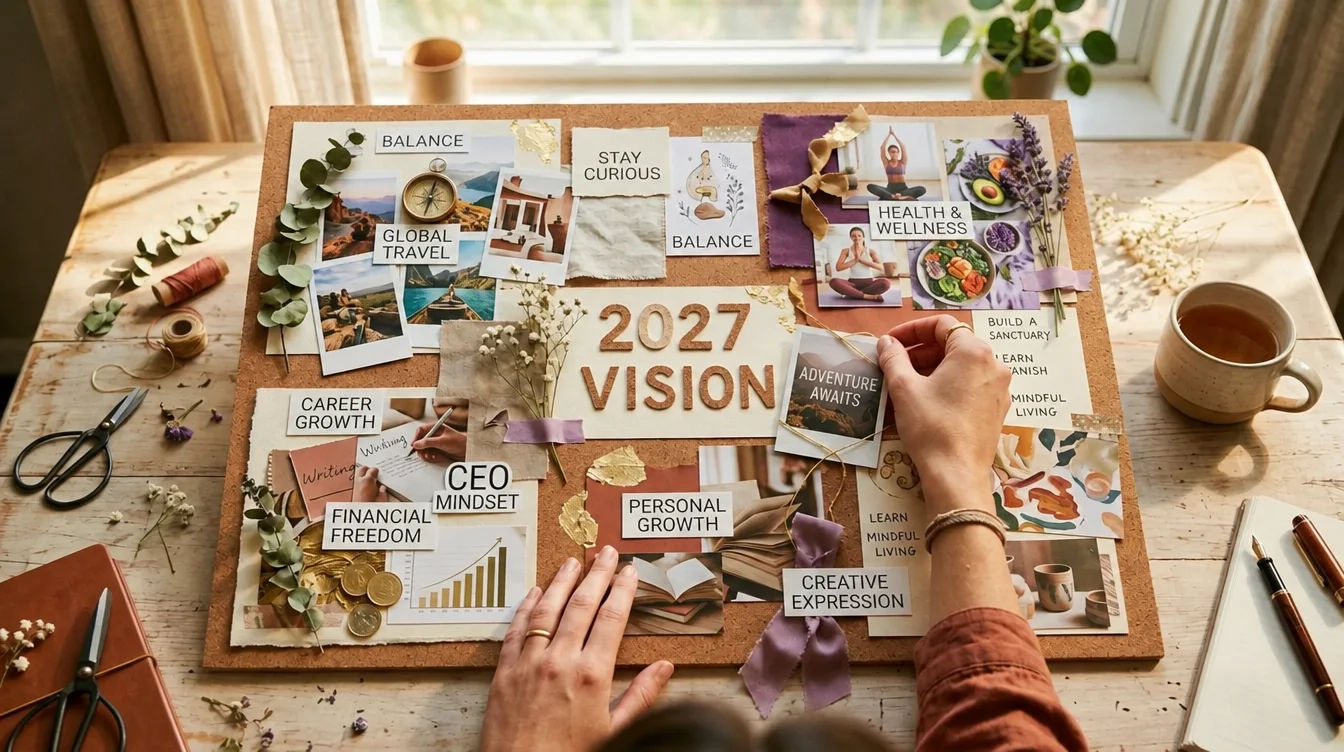
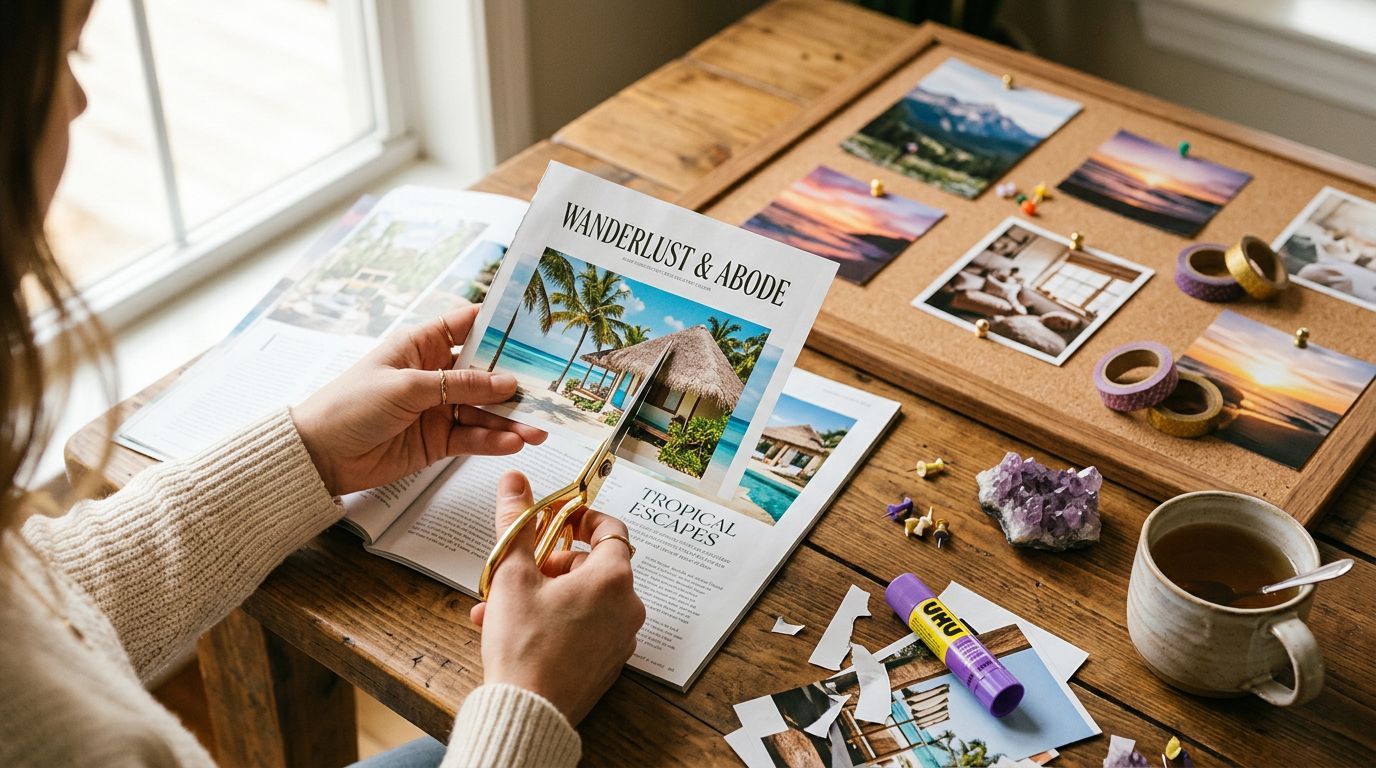
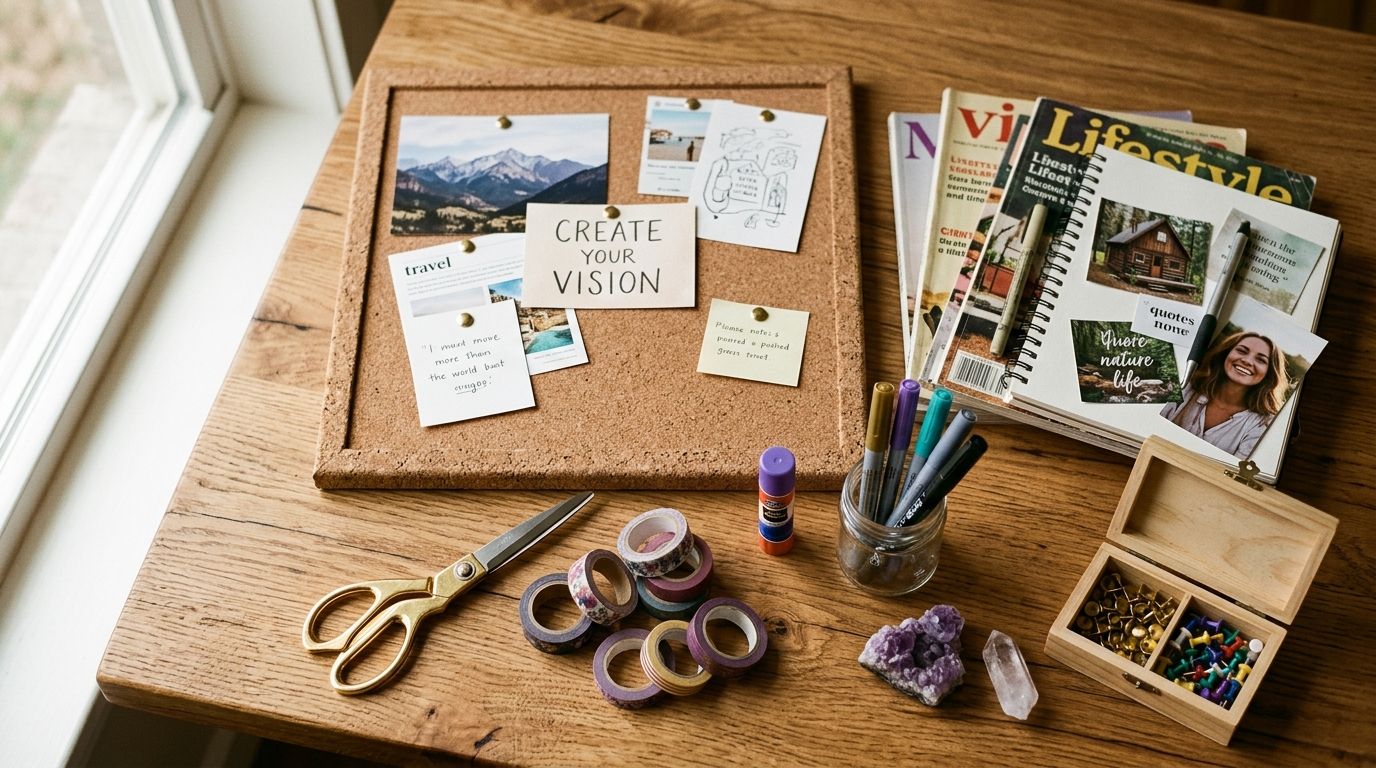
Vision board pictures work as daily reminders. A picture you see every day keeps a goal on your mind, makes it easier to imagine in detail, and nudges you to notice chances to act on it. The pictures don't make anything happen on their own; they help you stay focused on goals you then work toward.
Clear imagining matters because mental imagery engages many of the same brain areas as real perception (Pearson et al., 2015). Writing goals down seems to help too. In a small 2015 study by Dominican University psychologist Gail Matthews, people who wrote their goals down achieved more than people who only thought about them — and those who also sent weekly progress updates to a friend did best (76% reached or were more than halfway to their goals, versus 43% of those who didn't write them down) (Matthews research summary). It was presented at a conference rather than peer-reviewed, so treat it as encouraging, not proof. That study was about written goals, not pictures, so add a short written goal beside your main images.
Feeling matters too. A picture that leaves you flat, however "perfect," is easy to ignore. Choose images that make you feel excited, calm or hopeful — those are the ones you'll keep looking at.
What Are the Best Vision Board Pictures for Career Goals?
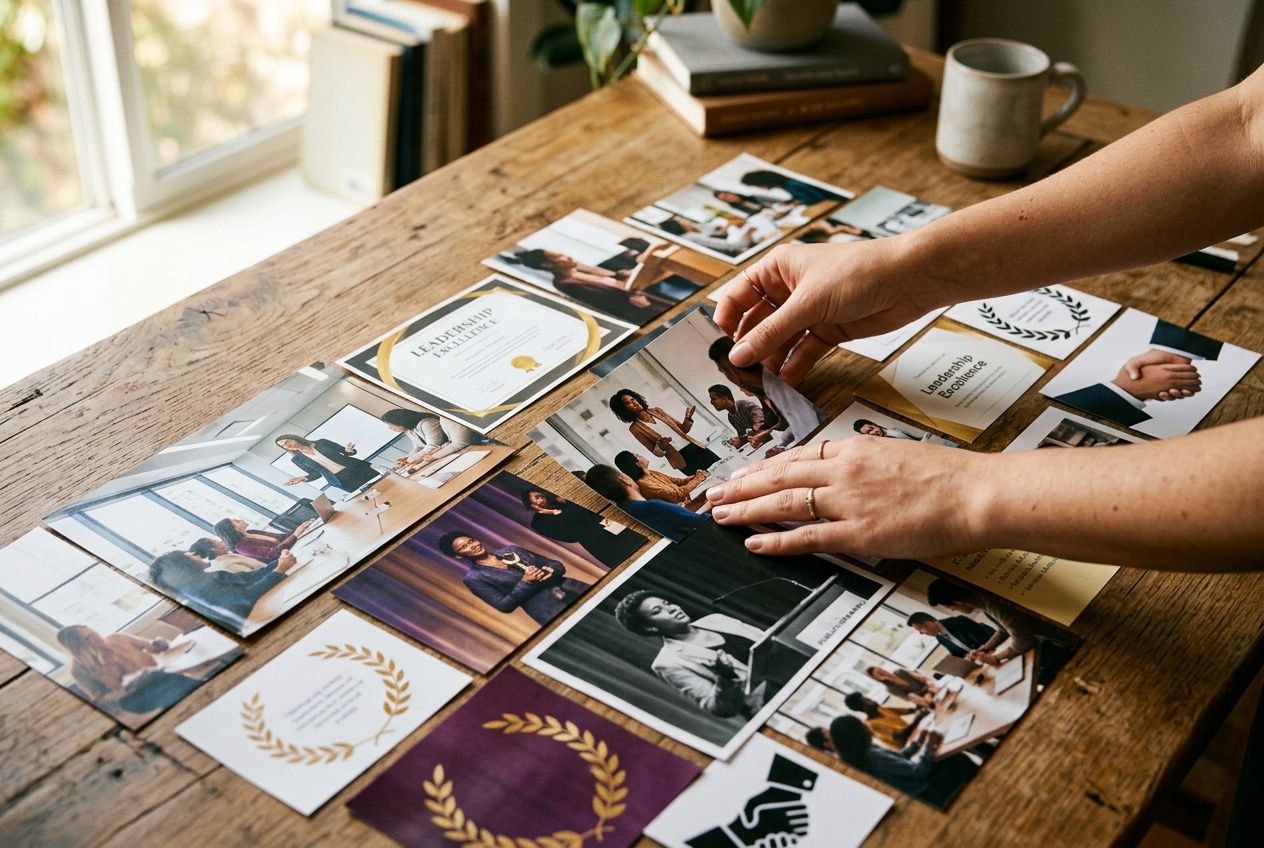
Career vision board pictures should show the feeling and environment of your ideal work life, not just a job title. Instead of searching "successful person," search for images that capture your specific vision: focused creativity, team collaboration, leadership presence, or peaceful solo work.
- For entrepreneurship or business ownership: Look for images of modern workspaces, people in leadership meetings, product launches, or productive creative spaces. Unsplash collections like "workspace" and "creative entrepreneur" work well.
- For creative fields (writing, design, art): Choose images showing the creative process—not just finished work. A designer at a desk, a writer at a laptop in natural light, or a studio filled with inspiration.
- For corporate advancement: Look for images of professional environments, confident presentations, or team collaboration. Avoid stuffy or old-fashioned corporate imagery unless that genuinely inspires you.
- For career transition: Use images that blend your current skills with your new direction. If you're moving from marketing to coaching, find images showing connection, communication, and one-on-one support.
A practical tip: search for lifestyle images rather than stock photo stereotypes. Real photos of actual workspaces often feel more authentic than posed professional photography.
| Career Vision Category |
Image Search Terms |
Best Sources |
| Entrepreneurship |
"founder at desk," "startup team," "business success" |
Unsplash, Pexels, Canva Pro |
| Creative Work |
"designer workspace," "artist studio," "creator" |
Unsplash, Flickr Creative Commons |
| Leadership |
"confident professional," "team leadership," "mentoring" |
Pexels, Pixabay |
| Work-Life Balance |
"peaceful office," "remote workspace," "lunch break" |
Unsplash, Pexels |
What Vision Board Pictures Work Best for Love and Relationships?
The best love vision board pictures show the kind of connection you want, not a fantasy of rescue or completion. Look for couples laughing, friends sharing a meal, families at ease together, or a person happily enjoying their own company. Choose images of partnership, shared joy and equal presence, not someone being "saved" or idealized.
- For romantic partnership: Avoid images of models staring intensely at the camera. Instead, look for couples laughing together, holding hands while walking, sitting in comfortable conversation, or embracing with genuine softness. Search terms like "happy couple," "genuine connection," "authentic love."
- For deepening an existing relationship: Choose images showing playfulness, adventure together, quiet moments of understanding, or physical affection that feels real. Avoid overly dramatic romance imagery.
- For self-love and wholeness (foundation for all relationships): Use images of solo figures in peaceful, confident settings—someone meditating, dancing alone, looking peacefully at a sunset, or enjoying their own company. This is arguably the most important category.
- For friendship or family connection: Search for group images showing genuine warmth—people laughing, gathering around food, embracing, or sitting together in comfortable silence.
💜 Pro Tip: (Curious why? See how to see your future self.) If you don't see a real person in your vision board pictures for this category, consider adding at least one. A person makes it easier to picture how the relationship you want would actually look and feel day to day.
How Do You Choose Vision Board Pictures for Health and Wellness?
Health vision board pictures should show vitality, not just thinness or perfection. Choose images of people enjoying movement, rest, calm and good food you actually like. Pictures of joy and strength keep you motivated, while pictures built on restriction and comparison tend to make you feel worse about where you are now.
-
For physical health and fitness: Choose images of people genuinely enjoying movement—running on a trail with a smile, dancing, hiking, playing sports, or stretching. Avoid images of extreme fitness aesthetics or exhaustion. You want a joyful, sustainable practice, not an obsession.
-
For mental health and peace: Look for images showing calm, stillness, and presence. Meditation, reading in sunlight, sitting by water, or journaling. These images reinforce the internal state you're cultivating.
-
For nutrition and nourishing food: Use pictures of colorful, whole foods you actually enjoy—not diet-culture imagery. Fresh vegetables, herbs, smoothie bowls, home-cooked meals around a table. The emotional tone should be abundance and care, not restriction.
-
For rest and recovery: Images of sleep, comfortable beds, bathrooms set for self-care, or someone simply resting should feel restorative—not lazy or guilty. Rest is part of being healthy.
-
For glowing skin and natural beauty: Skip heavily filtered images. Use photos showing healthy skin, genuine smiles, natural texture, or people enjoying skincare rituals. Beauty vision board pictures work best when they feel achievable and real.
Affirmations and vision boards are a mindset practice, not a substitute for medical, mental-health or financial advice.
What Are the Best Vision Board Pictures for Travel and Adventure?
The best travel vision board pictures show a specific place and the feeling you want there, not just a famous landmark to check off. A beach sunset means different things to different people—adventure, peace, romance, freedom—so pick the destination first, then the image that captures how you want to feel on that trip.
- For tropical travel: Turquoise water, white sand, lush vegetation, sunrise or sunset moments. Search "tropical paradise," "beach serenity," or "island getaway."
- For cultural exploration: Choose images showing local markets, historic architecture, people in traditional dress, or street food. This keeps the focus on curiosity and connection over shopping.
- For adventure and outdoor exploration: Hiking peaks, camping under stars, rock climbing, kayaking. Look for images showing your body in motion, not just landscapes.
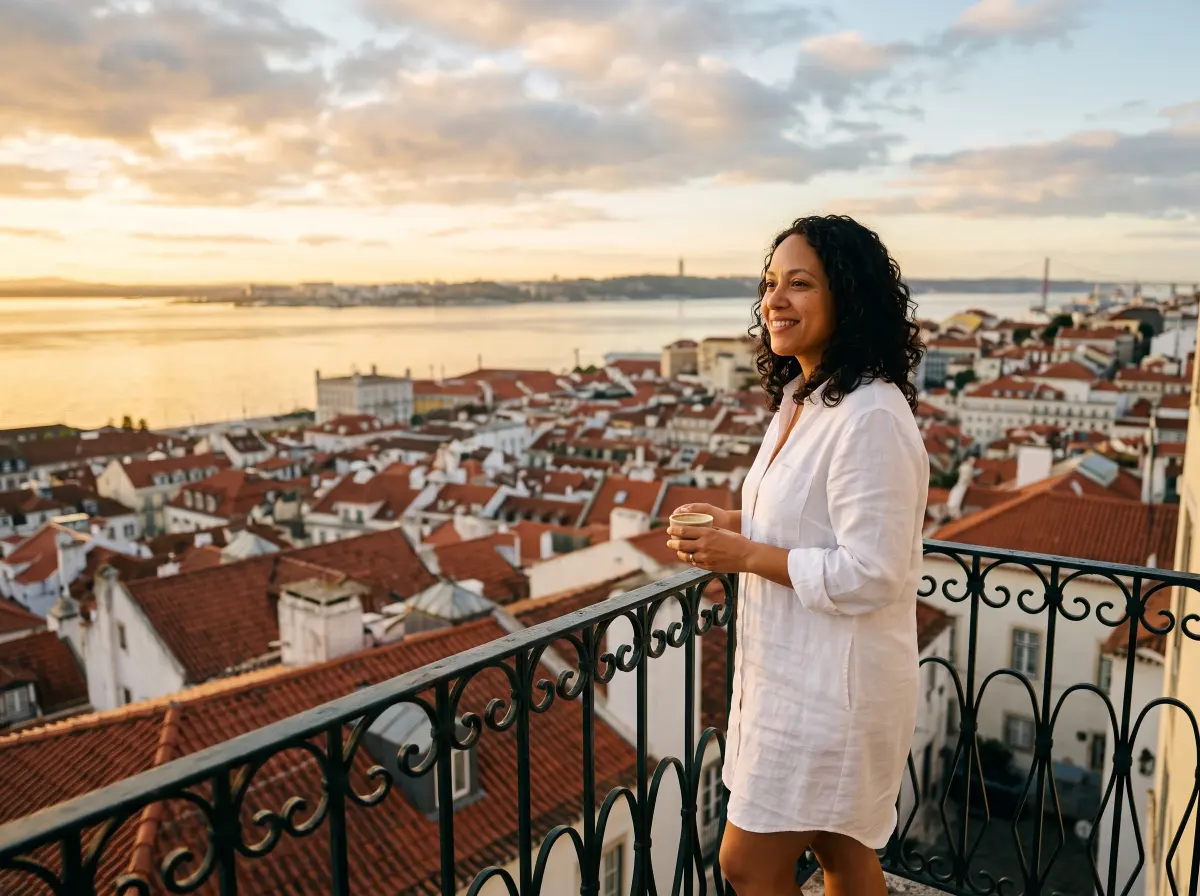
- For city exploration: Bustling streets, café culture, iconic landmarks lit at night, walking through neighborhoods. Choose the vibe—romantic European wandering versus energetic urban discovery.
- For solo travel freedom: Images of solo travelers—a person alone at a café, reading on a train, walking through a new city. These represent independence and self-trust.
✨ Key Insight: Use at least one image showing yourself in that destination, not just the location alone. If you're a visual person, find images where you can imagine yourself in the scene.
How Do You Source Vision Board Pictures Effectively?
The best sources for vision board pictures are free stock photo sites such as Unsplash, Pexels and Pixabay, design tools like Canva, Pinterest for ideas, and your own photos. Search with specific, feeling-based terms, such as "woman laughing at a beach café," rather than one-word searches like "success" or "happiness." Here's what each source offers:
-
Unsplash (unsplash.com): Free, high-quality photography with no credit required. Collections are well-organized by theme. Photos come from photographers worldwide.
-
Pexels (pexels.com): Similar to Unsplash—completely free, diverse imagery, easy search. Many photos feel less corporate than typical stock sites.
-
Pixabay (pixabay.com): A large library of free images including vectors and illustrations, which work well for abstract vision boards.
-
Canva (canva.com): Free and paid tiers. Thousands of templates and stock images specifically curated for design. Their vision board templates save time; see our Canva vision board walkthrough.
-
Pinterest (pinterest.com): Excellent for discovering curated collections and styles, though respect copyright when printing images. Save boards by goal category.
-
Your own photography: This is powerful. Photos of places you've been, people you love, even pictures of goals written on paper—these feel personal in a way stock photos can't.
Search strategy: Use specific, feeling-based terms rather than generic ones. Instead of "success," search "woman at computer smiling." Instead of "abundance," search "fresh fruit market." Specific searches surface images that match what you actually want. For more starting points, browse our vision board ideas and real vision board examples.

 Manifest Mosaic