369 Method: Step-by-Step Guide & Origin

The 369 method: write one affirmation 3 times in the morning, 6 in the afternoon, 9 at night. Step-by-step guide, examples, the Tesla myth and the research.

369 Method: Step-by-Step Guide & Origin
In this guide 11 sections
  1. 01What Is the 369 Manifestation Method?
  2. 02Did Nikola Tesla Really Believe in 3, 6, and 9?
  3. 03Why Does Writing the Same Thing Repeatedly Work?
  4. 04How Do You Do the 369 Method Step by Step?
  5. 05How Do You Write the Perfect 369 Affirmation?
  6. 06What Are the Different Versions of the 369 Method?
  7. 07What Mistakes Prevent the 369 Method From Working?
  8. 08How Many Days Should You Do the 369 Method?
  9. 09Try the 369 Method Now
  10. 10Continue Reading
  11. 11Sources & Methodology

The 369 method is a manifestation journaling technique: you write one affirmation by hand 3 times in the morning, 6 times in the afternoon and 9 times in the evening, usually for 21 to 45 days. The numbers nod to Nikola Tesla's reported fondness for the number 3. All you need is a pen and one clear goal.

Key Takeaways
  • Write ONE specific present-tense affirmation: 3 times morning, 6 times afternoon, 9 times evening
  • Commit to at least 21 days as a starting point — real habits often take longer (66 days on average in one study)
  • Write by hand — handwriting engages the brain more widely than typing in at least one EEG study
  • The affirmation must be emotionally specific, not vague (feel it as you write it)
  • The 3-6-9 pattern is a modern internet practice inspired by Tesla's reported love of the number 3, not something Tesla taught

What Is the 369 Manifestation Method?

The 369 manifestation method is an affirmation writing practice that uses the numbers 3, 6 and 9 to keep one goal front of mind. You choose one specific goal, convert it into a present-tense affirmation, and write it by hand 3 times upon waking, 6 times in the afternoon, and 9 times before bed, daily, for at least 21 days.

The method gained mainstream popularity through TikTok in 2020-2021. Fans link it to two older influences: Nikola Tesla's reported fascination with the number 3, and author Neville Goddard, who taught in the mid-20th century that imagination and repetition shape your reality (see the law of assumption for his approach). Other words for this kind of practice are covered in manifestation synonyms.

What makes the 369 method different from simply writing affirmations is the escalating repetition pattern:

  • 3 in the morning — sets your focus for the day
  • 6 in the afternoon — brings you back to the goal in the middle of daily tasks
  • 9 in the evening — the longest session, just before sleep, when many practitioners feel most reflective

The pattern builds throughout the day, with each session reinforcing the previous one. The method requires no special tools, no meditation experience, and no spiritual beliefs. A pen and a notebook are enough. This simplicity is a big reason it spread so widely online.

Did Nikola Tesla Really Believe in 3, 6, and 9?

Nikola Tesla never explained a belief in 3, 6 and 9, and he never taught the 369 method. Biographers describe a personal fixation on the number 3: he reportedly walked around a block three times before entering a building, asked for hotel rooms divisible by 3 and used napkins in multiples of 3. The 3-6-9 link came later.

The line most often quoted online — "If you only knew the magnificence of the 3, 6, and 9, then you would have the key to the universe" — is commonly attributed to Tesla, but no one has traced it to his writings or interviews, so treat it as a modern attribution rather than a verified quote.

Much of the "369 math" shared online comes from so-called vortex math, a modern idea that fans connect to Tesla. The simplified version: if you double any number repeatedly (1→2→4→8→16→32→64→128→256) and reduce each to a single digit (1→2→4→8→7→5→1→2→4→8→7→5), you get a repeating loop of 1, 2, 4, 8, 7, 5, and 3, 6 and 9 never appear. That's a true quirk of base-10 arithmetic, but it isn't evidence of any hidden power in those numbers.

So why use them? The numbers give the practice a simple, memorable structure, and a routine that feels meaningful is easier to stick with than one that feels arbitrary.
Why Does Writing the Same Thing Repeatedly Work?

Writing the same goal again and again keeps it at the front of your mind, and writing it by hand makes you slow down and think about each word. No study has tested the 369 method itself, but research on writing goals down and on handwriting suggests why it can help you stay focused.

In a small 2015 study by Dominican University psychologist Gail Matthews, people who wrote their goals down achieved more than people who only thought about them — and those who also sent weekly progress updates to a friend did best (76% reached or were more than halfway to their goals, versus 43% of those who didn't write them down) (Matthews research summary). It was presented at a conference rather than peer-reviewed, so treat it as encouraging, not proof.

Handwriting also seems to engage the brain differently from typing. In a 2024 EEG study in Frontiers in Psychology, handwriting produced more widespread connectivity across brain regions than typing did (Van der Weel & Van der Meer, 2024). It was a small study, so don't read too much into it, but it's one reason the 369 method asks for pen and paper.

✨ Key Insight: Think of it like watering a plant. A little in the morning, more at midday and a good soak in the evening. The plant doesn't grow during watering; it grows in between. In the same way, the writing itself is small; what matters is the focus and action it prompts during the rest of your day.

❓How Well Do You Know the 369 Method?

How many times do you write your affirmation in the morning, afternoon and evening?

How Do You Do the 369 Method Step by Step?

To do the 369 method, choose one specific goal, turn it into a short present-tense affirmation, then write it by hand 3 times after waking, 6 times in the afternoon and 9 times before bed. Repeat every day for at least 21 days. Each session takes a few minutes, so the whole practice fits into about 15 minutes a day.

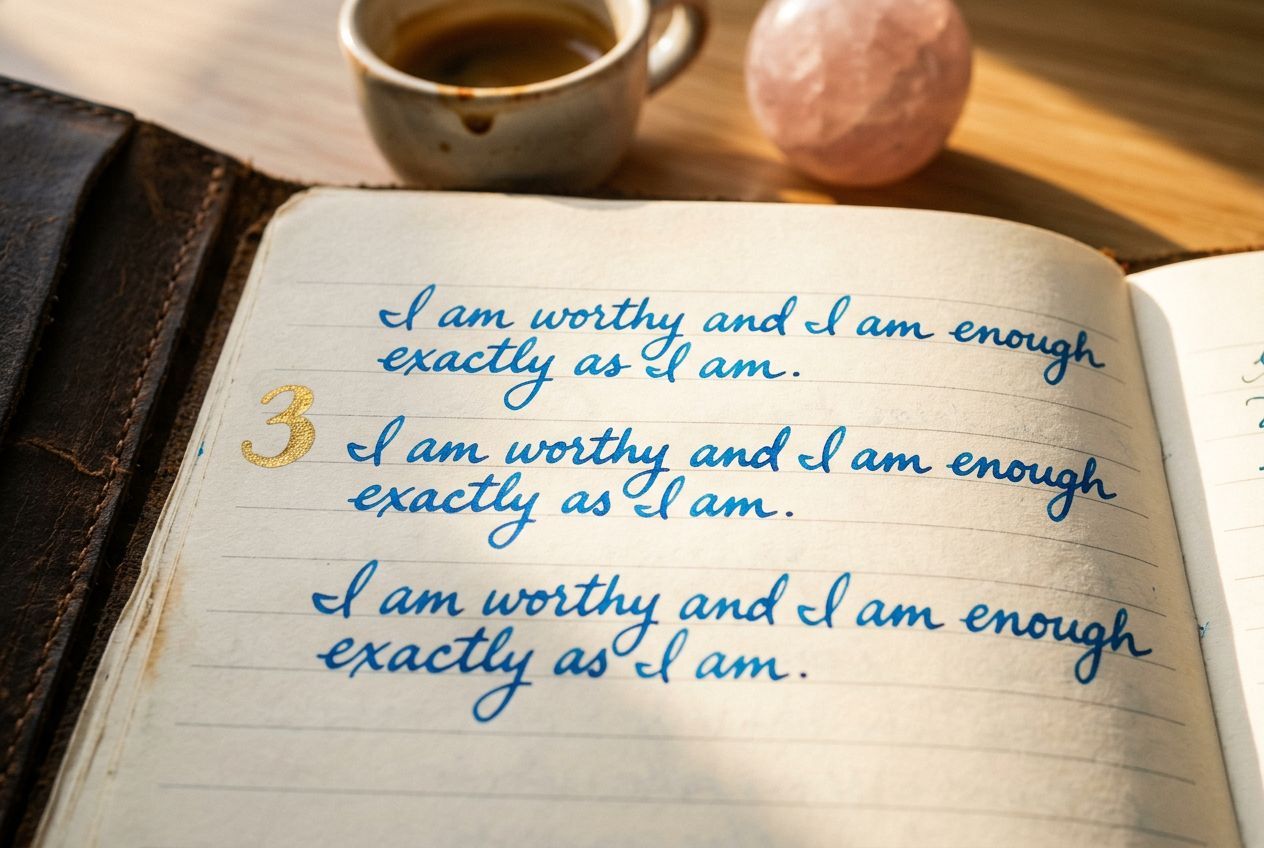
369 manifestation method — journal open to morning affirmation repetitions with sunrise light and coffee
  1. Choose one specific intention. Not three intentions. Not a vague wish. One clear, specific goal. "I manifest a $5,000 raise before September" is specific. "I want more money" is too vague to act on. If you're unsure which intention to start with, the Manifestation Style Quiz can help you choose.
  2. Convert your intention into a present-tense affirmation. Write it as if it's already true. Present tense. First person. Emotionally charged. See the affirmation writing section below for the complete formula.
  3. Morning — write it 3 times. Within 20 minutes of waking, before checking your phone or email, open your journal and write your affirmation by hand 3 times. Slowly. Feel the words as you write them. Don't rush through it to check a box.
  4. Afternoon — write it 6 times. Between 12pm and 3pm, write your affirmation 6 times. This session often feels more automatic than the morning — that's fine. Use it as a midday reset back to your goal.
  5. Evening — write it 9 times. Within 30 minutes of bedtime, write your affirmation 9 times. This is the longest session and the one many practitioners find most calming. After the ninth repetition, close your journal, close your eyes, and visualize the affirmation as already real for 30-60 seconds before falling asleep.

Repeat daily for 21-45 days without skipping.

Ready to start right now? A plain notebook is all you need. For the broader daily practice the 369 method sits inside, see how to journal for manifestation.

How Do You Write the Perfect 369 Affirmation?

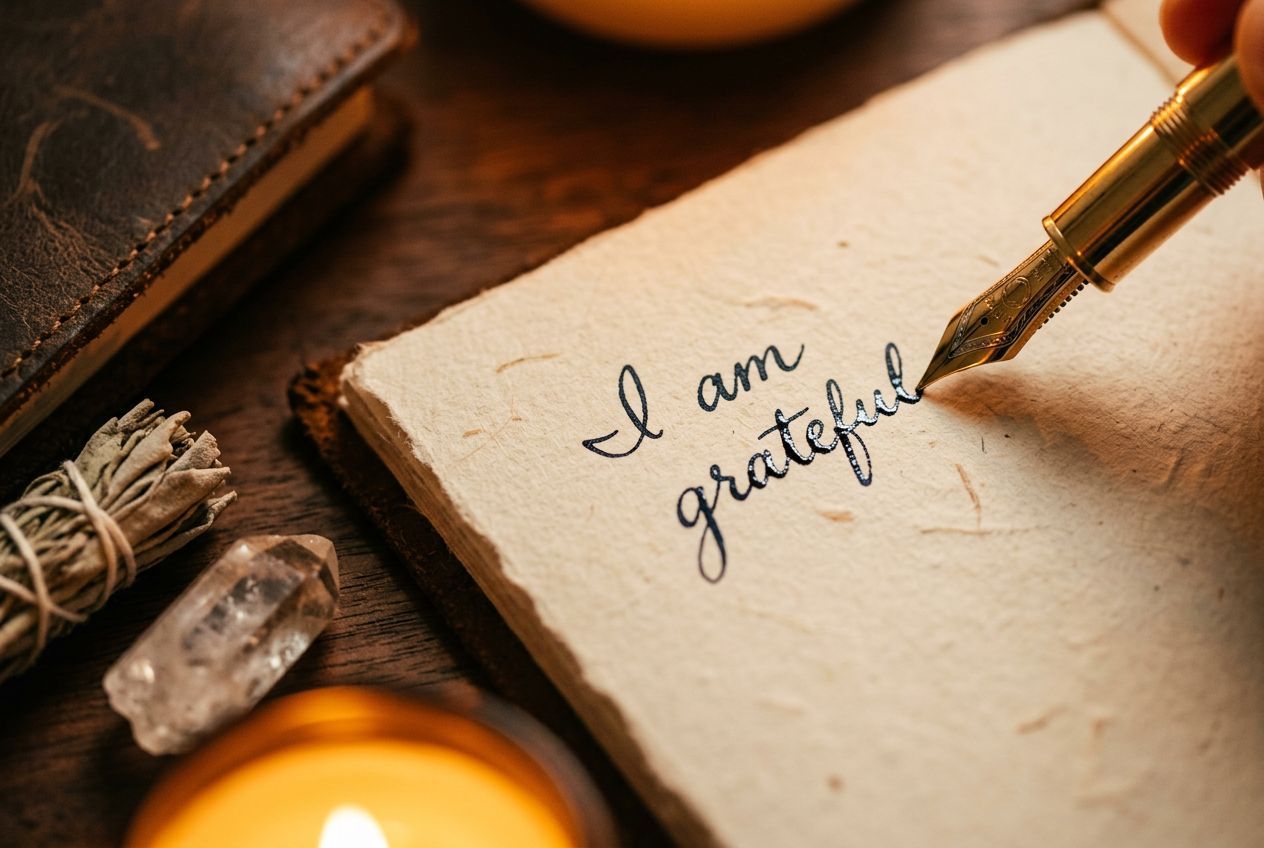
The best 369 affirmation is one sentence under 25 words, written in the present tense and first person, naming a specific goal and a feeling. For example: "I am so grateful that I earn $6,000 a month and feel secure." It should stretch you but still feel believable, because you'll write it 18 times a day.

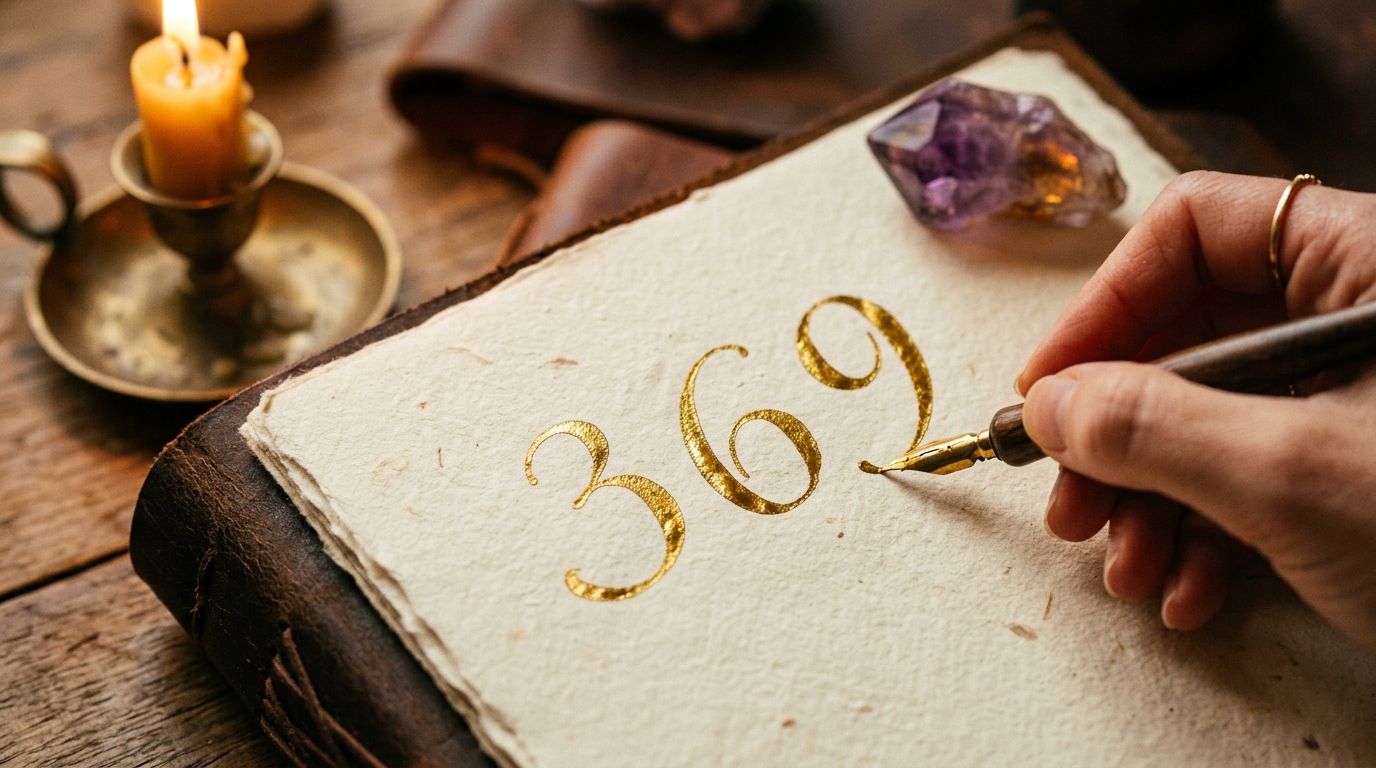
369 method — close-up of gold pen writing present-tense affirmation in journal with crystal and dried herbs

The formula: I am [feeling word] that [specific outcome in present tense] and I feel [emotional state].

Element Bad Example Good Example
Tense "I will get a promotion" "I am promoted to Director"
Specificity "I want more money" "I earn $12,000 per month"
Emotion "I have a good relationship" "I am in a love that makes me feel chosen"
Length 40+ words (too long to write 18×) 15-25 words (ideal for repetition)
Belief "I am a billionaire" (too far) "I am debt-free saving $2,000/month"

Real affirmation examples by category:

  • Money: "I am so grateful that my business generates $10,000 per month and I feel completely financially free."
  • Love: "I am in a loving partnership where I feel deeply seen, chosen, and adored every single day."
  • Career: "I am thriving as a Creative Director at a company I respect and I feel proud walking into work."
  • Health: "My body is strong, energized, and healthy and I feel powerful in everything I do."
  • Home: "I am living in my dream apartment in Brooklyn with natural light filling every room."

For more ideas across every life area, see our manifestation examples. You can also use the free Affirmation Generator to create a personalized affirmation based on your specific goal. To apply the 369 method specifically to wealth — block identification, six wealth methods, and a 30-day plan — see manifest money.

Critical rules:

  1. Keep it under 25 words. You're writing this 18 times a day. If it's too long, you'll start abbreviating or rushing, which kills the emotional engagement.
  2. Use present tense only. "I am" not "I will." "I have" not "I want." Future tense keeps the goal feeling permanently out of reach.
  3. Include a feeling word. "Grateful," "free," "proud," "peaceful," "alive." The feeling keeps the words from going flat.
  4. It must stretch you but not break your belief. "I earn $10,000/month" when you currently earn $4,000 creates productive tension. "I am a trillionaire" is so far from your life that you won't believe it — and one study found that repeating positive statements you don't believe can leave people with low self-esteem feeling worse (Wood, Perunovic & Lee, 2009).

What Are the Different Versions of the 369 Method?

The main versions of the 369 method are the classic affirmation version, an appreciation version, a longer scripting version, and versions that add visualization or the pillow method. All share the core idea of writing your goal repeatedly at three points in the day. Start with the classic version and experiment only once it feels easy.

  • Classic 369: The standard version described in this guide, as it spread on TikTok. 3-6-9 repetitions, morning-afternoon-evening, 21+ days. One affirmation, handwritten.
  • Appreciation 369: Write 3 things you appreciate about your desire (morning), 6 reasons you believe it's possible (afternoon), and 9 things about how it will feel when it arrives (evening). More varied but harder to maintain.
  • Scripting 369: Instead of a short affirmation, write a full paragraph scripting your desired reality 3 times morning, 6 times afternoon, 9 times evening. More immersive but extremely time-intensive.
  • 369 with visualization: After each writing session, close your eyes and visualize the affirmation as real for 60 seconds. Pairs well with vision board practice.
  • 369 with the pillow method: Write your affirmation 3-6-9 during the day, then fold the paper and place it under your pillow at night. It adds a simple physical ritual to the end of the day.

Which version should you choose? If you're new to manifestation, start with the classic 369. It's the simplest and requires the least daily time (about 15 minutes total). If you've been practicing for months and want deeper immersion, try the scripting or visualization variations.

What Mistakes Prevent the 369 Method From Working?

The most common 369 method mistakes are skipping days, switching affirmations mid-cycle, writing on autopilot, choosing a vague goal, typing instead of writing, and anxiously checking for results. Each one weakens the focus the practice is meant to build. The good news: every one is easy to fix once you know to watch for it.

  1. Skipping days. Consistency is what turns the practice into a habit. The good news: in University College London habit research, missing a single day did not meaningfully set people back (Lally et al., 2010). If you miss a day, don't restart the count — just resume the next morning.
  2. Changing your affirmation mid-cycle. Switching at day 10 splits your focus between two goals instead of building on one. Commit for the full 21 days.
  3. Writing without feeling. Mechanical writing with no emotional engagement is just handwriting practice. Each repetition needs 2-3 seconds of emotional presence. Feel the words. Slow down.
  4. Choosing a vague affirmation. "I am happy and successful" gives you nothing specific to notice or act on. Get specific. Numbers. Names. Dates. Feelings.
  5. Typing instead of handwriting. Typing is faster, but it's easier to do on autopilot, and handwriting engaged the brain more widely in at least one EEG study.
  6. Obsessing over results during the 21 days. Checking for signs every hour turns the practice into a source of stress. Write your affirmation, feel it, then get on with your day, taking the small actions your goal needs.

✨ Key Insight: Writing plus seeing plus feeling is the triple lock. Pair your 369 affirmation with an image of yourself already living it, and the written intention and the picture reinforce each other every time you look.

How Many Days Should You Do the 369 Method?

Most people start the 369 method with 21 days, and many continue to 33 or 45. But 21 days is not a scientific rule: in one study, new habits took an average of 66 days to become automatic, ranging from 18 to 254 days (Lally et al., 2010). Treat 21 days as a first commitment, not a finish line.

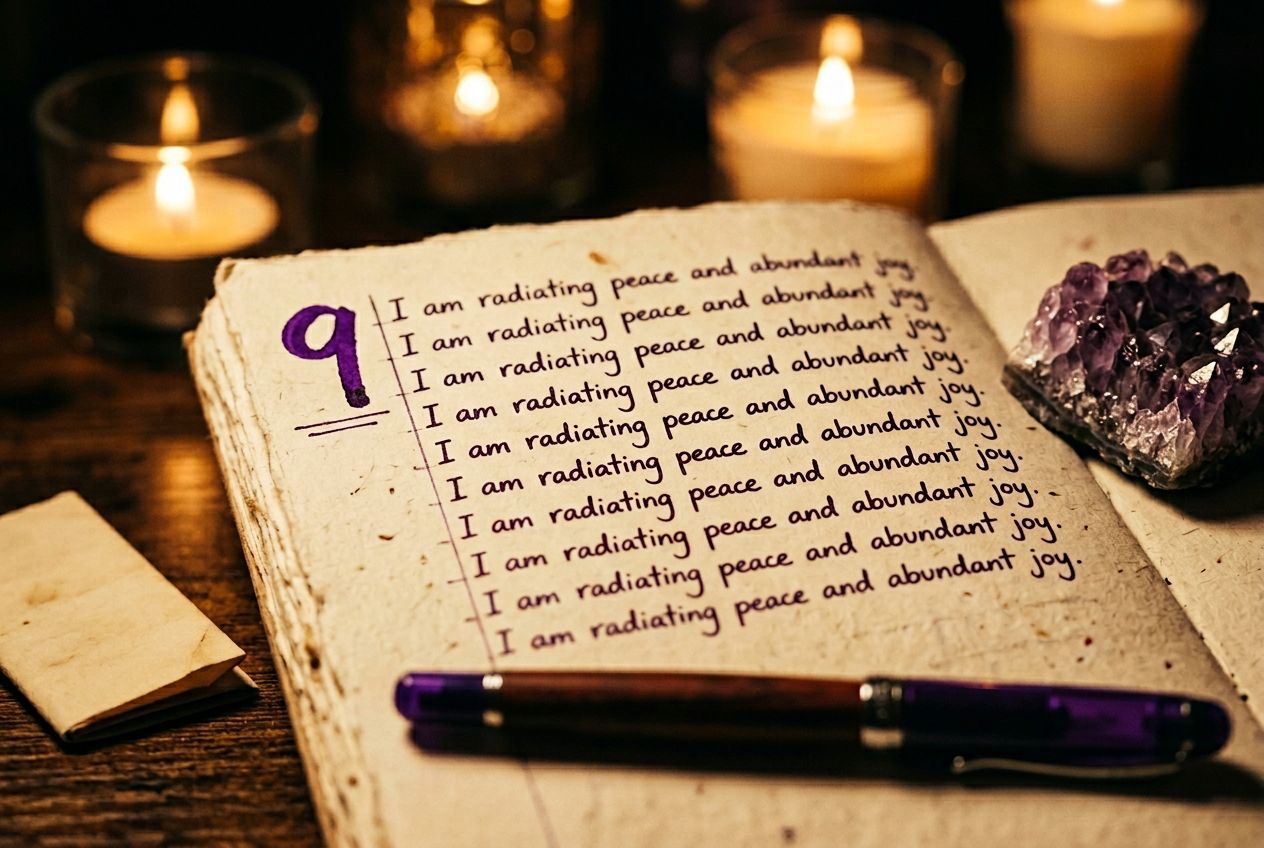
369 manifestation method — journal showing nine evening repetitions by candlelight with amethyst and folded paper
  • 21 days: The popular starting commitment. Many people find the routine feels easier by now, and they start noticing things related to their goal more often.
  • 33 days: In numerology, 33 is called a master number, which is why many practitioners choose it. At 33 days, you've written your affirmation 594 times.
  • 45 days: A longer cycle (810 repetitions). For many people the affirmation starts to feel less like "something I write" and more like "something I believe," though that varies from person to person.

What happens after your cycle ends?

  1. Start a new affirmation for a different goal. Keep the same structure — 3-6-9 for 21+ days.
  2. Continue the same affirmation if the goal isn't reached yet. There's no upper limit.
  3. Try a different method. Once the daily habit is in place, scripting or visualization with a vision board can build on it.

Pro Tip: Use a dedicated notebook just for your 369 practice. The physical act of picking up the same notebook three times a day creates a ritual anchor. Over time, picking up that notebook becomes a cue that it's time to focus on your goal.

Try the 369 Method Now

You don't need to wait until tomorrow morning. Grab a pen and paper and write your first affirmation right now.

If you're not sure what to write, start with this template and fill in the blanks:

"I am so grateful that [specific outcome] and I feel [emotion] every day."

The free Affirmation Generator can help you craft an affirmation based on your specific goal. Generate one, refine it to under 25 words, and begin your 21-day cycle today. If your affirmation feels flat, try writing it from the picture of your future self already living it.

Want to combine the 369 method with other techniques? A popular combination is:

  1. 369 journaling (written focus)
  2. Vision board viewing (visual reminder), such as a 2027 vision board
  3. Pillow method before sleep (a calming end-of-day ritual)

Write your affirmation 9 times, look at your vision board, fold the paper under your pillow, and fall asleep picturing the goal. Imagining something engages many of the same brain areas as experiencing it (Kosslyn et al., 2001; Pearson et al., 2015), which is one reason pairing words with pictures feels so vivid.

For the full framework on combining multiple methods, read the complete guide on how to manifest anything.

See yourself living it in 2027 — make your first picture free →

Continue Reading

If the 369 method resonated, these next reads deepen the practice — pick the one closest to where you are right now.


Sources & Methodology

Matthews, G. — Goals research summary, Dominican University — Writing goals down and sending weekly progress updates to a friend; a conference presentation, not peer-reviewed.

Lally et al. (2010), "How are habits formed," European Journal of Social Psychology — New habits took an average of 66 days (range 18–254) to become automatic; missing one day did not meaningfully derail the process.

Van der Weel & Van der Meer (2024), "Handwriting but not typewriting leads to widespread brain connectivity," Frontiers in Psychology — Small high-density EEG study comparing handwriting and typing.

Pearson et al. (2015), "Mental imagery: functional mechanisms and clinical applications," Trends in Cognitive Sciences and Kosslyn, Ganis & Thompson (2001), "Neural foundations of imagery," Nature Reviews Neuroscience — How imagining something engages many of the same brain areas as perceiving or doing it.

Wood, Perunovic & Lee (2009), "Positive self-statements: power for some, peril for others," Psychological Science — Why affirmations should feel believable.

Neville Goddard Lectures Archive — Goddard's own mid-20th century lectures on imagination and assumption, presented here as his teachings, not as research.

Methodology: The 369 method spread mainly through social media, and no study has tested the 3-6-9 pattern itself. The research cited here supports narrower points: writing goals down, habit formation, handwriting and mental imagery. Tesla's habits around the number 3 come from biographical accounts; the popular "key to the universe" quote has no verified source. Sources checked September 2026. Back to the Manifest Mosaic home page.


Questions

Frequently asked questions

The 369 method is a manifestation journaling technique where you write one specific affirmation by hand 3 times in the morning, 6 times in the afternoon and 9 times before bed, usually for 21 to 45 days. Its numbers nod to Nikola Tesla's reported fondness for the number 3.

Pick one specific goal, turn it into a present-tense affirmation under 25 words, then write it by hand 3 times within 20 minutes of waking, 6 times between noon and 3pm, and 9 times in the 30 minutes before sleep. Repeat daily for 21 to 45 days.

Most people start with 21 days, then continue to 33 or 45. Twenty-one days is a popular commitment, not a scientific rule: one study found new habits took an average of 66 days to become automatic, with a range of 18 to 254 days.

No. Tesla never taught the 369 method. It spread on TikTok around 2020, inspired by biographers' accounts of Tesla's fixation on the number 3. The popular quote about 3, 6 and 9 being the key to the universe is attributed to Tesla but has no verified source.

Write one specific present-tense affirmation under 25 words. Bad: 'I want more money.' Good: 'I am so grateful that my business earns $10,000 every month and I feel completely financially free.' Be specific, emotional, and just stretchy enough to believe.

No study has tested the 369 method itself. It can help as a focusing habit: writing goals down is linked to better follow-through in a small study by Gail Matthews, and repetition builds habits. It works best alongside real action toward your goal, not instead of it.

You can, but writing is the standard version for good reason. Handwriting slows you down, makes it harder to go on autopilot, and engaged the brain more widely than typing in one small EEG study. If writing isn't possible, saying it aloud is a good backup.

Your first picture is free

See yourself in 2027.

Write what you want from next year, add one selfie, and see a photo of you already living it. Then turn all nine wishes into your board.